Buy management-school.eu ?
We are moving the project
management-school.eu .
Are you interested in purchasing the domain
management-school.eu ?
domain@kv-gmbh.de · 0541-91531010
Buy management-school.eu ?
What is a cross-sectional image?
A cross-sectional image is a two-dimensional representation of a three-dimensional object or structure. It is typically obtained by slicing through the object or structure in a specific plane and capturing the internal details. Cross-sectional images are commonly used in medical imaging techniques such as CT scans and MRIs to visualize internal organs and tissues. These images provide valuable information about the anatomy and pathology of the subject being studied. **
What are cross-sectional functions in mathematics?
Cross-sectional functions in mathematics refer to functions that represent the intersection of a three-dimensional surface with a plane. These functions are used to analyze the behavior of a surface at a specific point or along a specific direction. By examining the cross-sectional functions of a surface, mathematicians can gain insights into its curvature, slope, and other properties. This concept is commonly used in calculus and differential geometry to study the behavior of surfaces in three-dimensional space. **

Similar search terms for Cross-sectional
Top-Angebote
Products related to Cross-sectional:
-
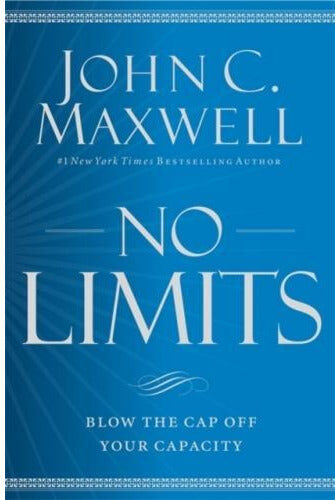
Little Brown Book Group No Limits: Blow the Cap Off Your Capacity by John C. Maxwell – Personal Growth & Leadership Development GuideNo Limits: Blow the CAP Off Your Capacity Description We often treat the word capacity as if it were a natural law of limitation. Unfortunately; most of us are much more comfortable defining what we perceive is off limits rather than what's possible. Could it be that many people have allowed what they perceive as capacity to define them? Have they allowed their perception to limit their attitudes about their potential? In his newest book; John Maxwell identifies 17 core capacities. Some of these are abilities we all already possess; such as energy; creativity and leadership. Others are aspects of our lives controlled by our choices; like our attitudes; character; and intentionality. Maxwell examines each of these 17 capacities; and provides clear and actionable advice on how you can increase your potential in each. He will guide you on how to identify; grow; and apply your critical capacities to your daily life. Once you've blown the 'cap' off your capacities; you'll find yourself more successful--and fulfilled--in your daily life.5,99 £*Shipping: 2,99 £Secure redirect to the provider
-
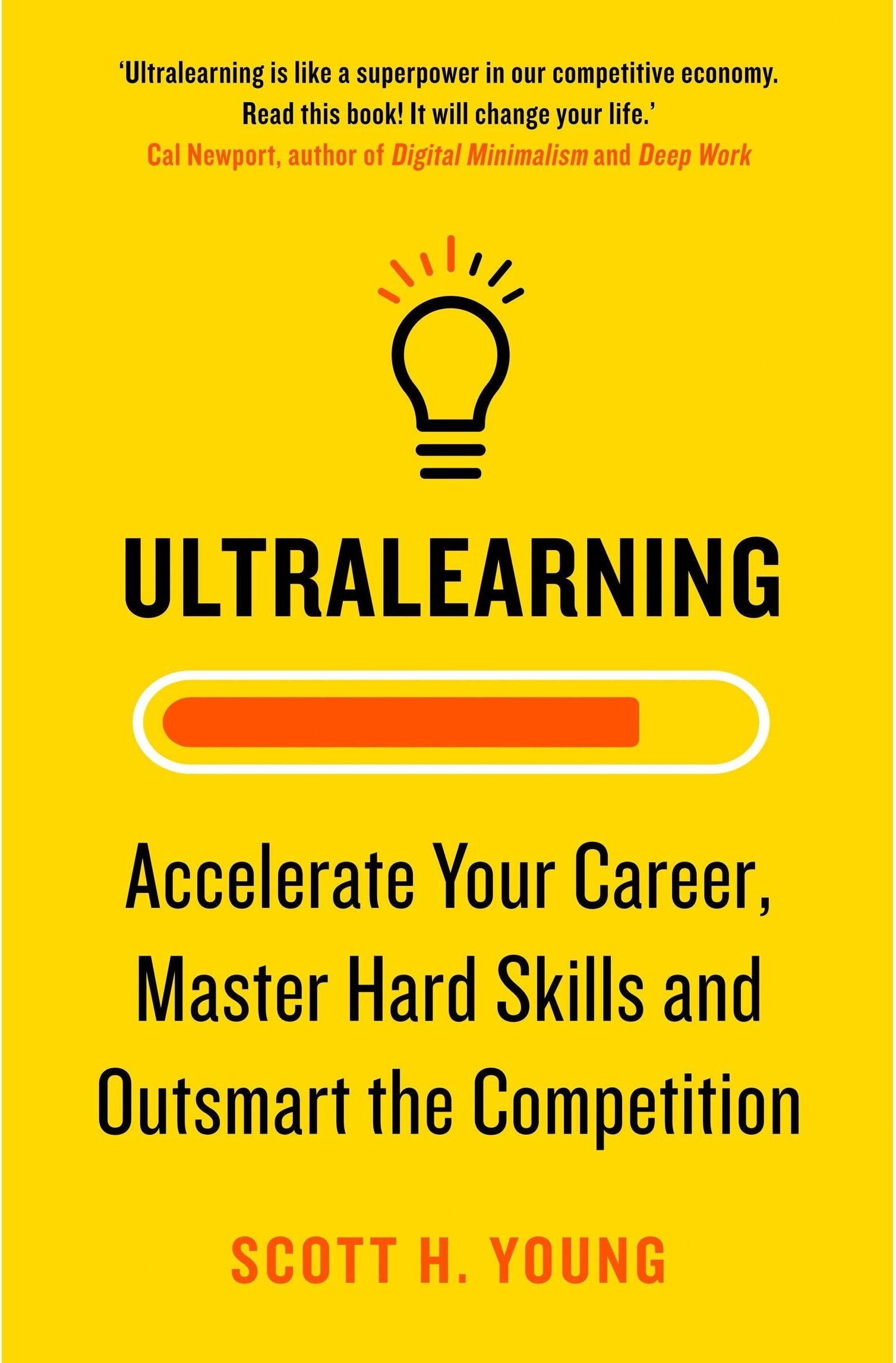
Thorsons Ultralearning: Accelerate Your Career, Master Hard Skills and Outsmart the CompetitionFuture-proof your career and maximize your competitive advantage by learning the skill necessary to stay relevant, reinvent yourself, and adapt to whatever the workplace throws your way in this essential guide. Faced with tumultuous economic times and rapid technological change, staying ahead in your career depends on continual learning―a lifelong mastery of new ideas, subjects, and skills. If you want to accomplish more and stand apart from everyone else, you need to become an ultralearner. Scott Young incorporates the latest research about the most effective learning methods and the stories of other ultralearners like himself―among them Ben Franklin, Judit Polgar, and Richard Feynman, as well as a host of others, such as little-known modern polymaths like Nigel Richards who won the World Championship of French Scrabble―without knowing French. Young documents the methods he and others have used and shows that, far from being an obscure skill limited to aggressive autodidacts, ultralearning is a powerful tool anyone can use to improve their career, studies, and life. Ultralearning explores this fascinating subculture, shares the nine principles behind every successful ultralearning project, and offers insights into how you can organize and execute a plan to learn anything deeply and quickly, without teachers or budget-busting tuition costs. Whether the goal is to be fluent in a language (or ten languages), earn the equivalent of a college degree in a fraction of the time, or master multiple skills to build a product or business from the ground up, the principles in Ultralearning will guide you to success.8,99 £*Shipping: 2,99 £Secure redirect to the provider
-
Perfect Picks Market Geometric Building Blocks Set For Kids Early Education Intelligence Development Toy Geometric Building Blocks Set For Kids Early Education Intelligence Development ToyUnlock your child's potential with this early education equipment designed to stimulate creativity and intelligence! This geometric set is the perfect building block toy for boys, helping to develop problemsolving skills while having fun. The...35,97 $*Shipping: 0,00 $Secure redirect to the provider
-
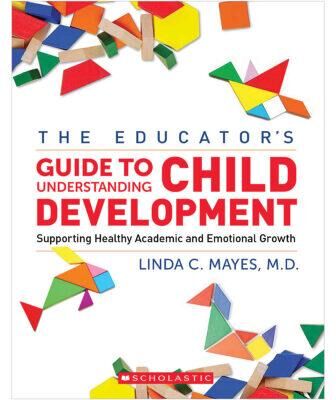
Scholastic Teaching Resources The Educator's Guide to Understanding Child DevelopmentThe Yale Child Study Center Guide to Understanding Your Child was a landmark essential resource for parents, offering accessible information on child development based on a deep understanding of brain research and psychology. Now that knowledge has...35,99 $*Shipping: 0,00 $Secure redirect to the provider

-
How do you calculate the cross-sectional area?
To calculate the cross-sectional area of a shape, you need to determine the shape of the cross-section (e.g., circle, square, triangle), measure the dimensions of the shape (e.g., radius, side lengths), and then use the appropriate formula to find the area. For example, the cross-sectional area of a circle can be calculated using the formula A = πr^2, where r is the radius of the circle. Similarly, the cross-sectional area of a square can be calculated by multiplying the length of one side by itself (A = side length x side length). **
-
What is the cross-sectional shape of wood?
The cross-sectional shape of wood can vary depending on the type of tree it comes from. In general, wood has a circular or oval cross-sectional shape due to the growth rings and structure of the tree trunk. This shape is a result of the way trees grow, with new layers of wood being added each year, creating distinct growth rings. Additionally, the presence of medullary rays can give wood a radial pattern when viewed in cross-section. **
-
What are the cross-sectional measures in mathematics?
Cross-sectional measures in mathematics refer to the analysis of data at a specific point in time, rather than over a period of time. This type of analysis allows for the comparison of different variables at a single point in time, providing a snapshot of the relationships between those variables. Cross-sectional measures are commonly used in statistics and econometrics to understand the relationships between different factors in a given population or sample. Examples of cross-sectional measures include correlations, regressions, and descriptive statistics. **
-
Why is quality management referred to as a so-called cross-sectional function?
Quality management is referred to as a cross-sectional function because it involves various departments and functions within an organization. It cuts across different areas such as production, marketing, and customer service to ensure that quality standards are met at every stage of the product or service lifecycle. Quality management requires collaboration and coordination between different teams to achieve the desired level of quality and customer satisfaction. It is not limited to a single department but involves the entire organization in maintaining and improving quality standards. **
How do you calculate resistance with cross-sectional area?
To calculate resistance with cross-sectional area, you can use the formula R = ρ * (L/A), where R is the resistance, ρ is the resistivity of the material, L is the length of the material, and A is the cross-sectional area. By rearranging the formula, you can solve for resistance by multiplying the resistivity by the length and dividing by the cross-sectional area. This formula shows that resistance is inversely proportional to the cross-sectional area, meaning that as the cross-sectional area increases, the resistance decreases. **
How to perform a cross-sectional calculation of cables?
To perform a cross-sectional calculation of cables, you will need to determine the cross-sectional area of the cable. This can be done by measuring the diameter of the cable and then using the formula for the area of a circle (A = πr^2) to calculate the cross-sectional area. Once you have the cross-sectional area, you can then use it to calculate the cable's resistance, current-carrying capacity, and voltage drop. It is important to ensure that the cable's cross-sectional area meets the requirements for the specific application and complies with relevant standards and regulations. **
Top-Angebote
Products related to Cross-sectional:
-
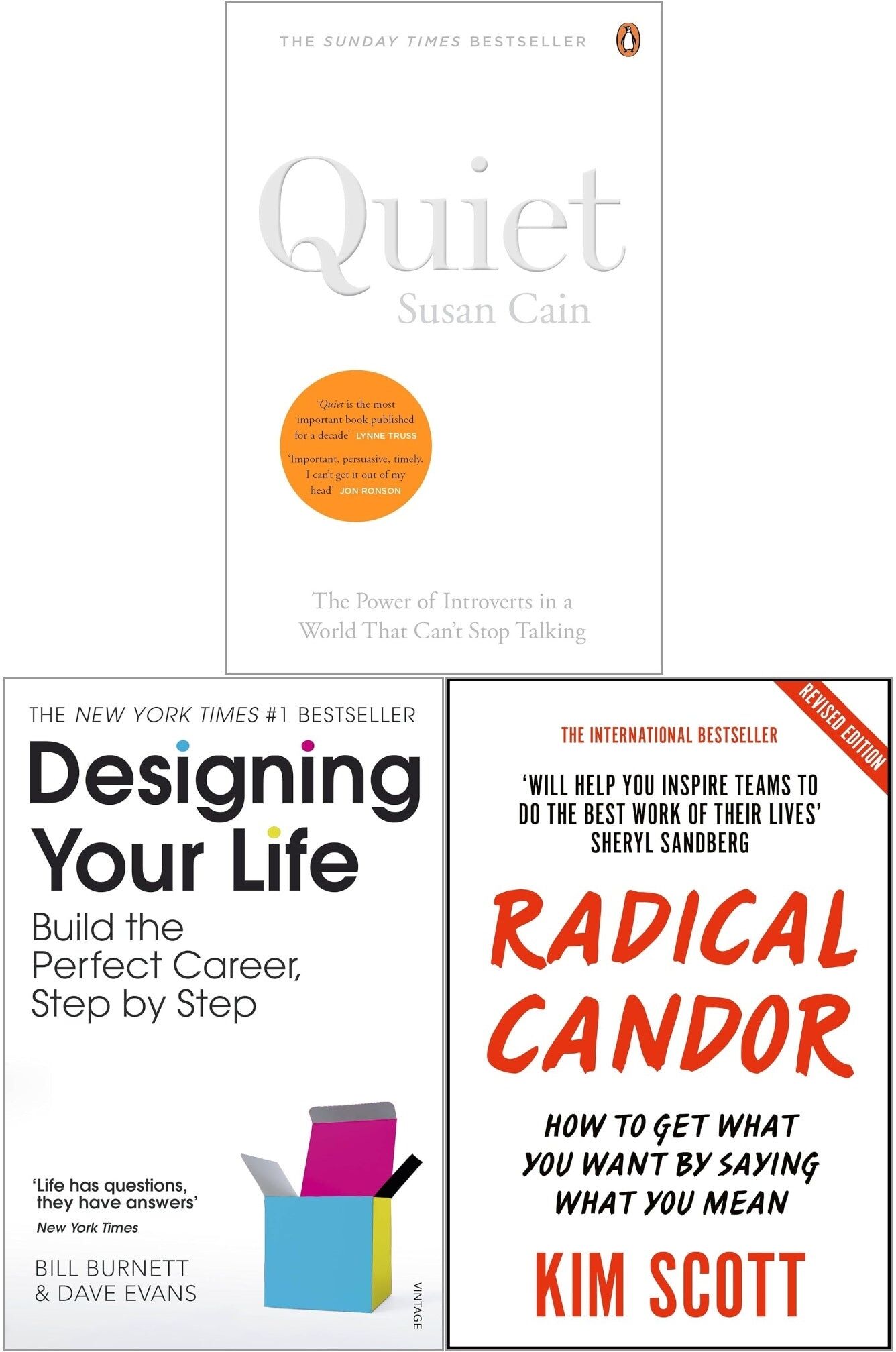
Penguin/Pan Macmillan Designing Your Life, Radical Candor and Quiet 3 Books Collection Set Personal Development, Leadership, Career Success & Self ImprovementDesigning Your Life, Radical Candor and Quiet 3 Books Collection Set Designing Your Life by Bill Burnett & Dave Evans Stanford innovators Bill Burnett and Dave Evans show us how design thinking can help us create a life that is both meaningful and fulfilling, regardless of who and where we are, our careers and our age. Designing Your Life puts forward the idea that the same design thinking responsible for amazing technology, products and spaces can be used to build towards a better life and career by a design of your own making. Radical Candor by Kim Scott Radical Candor by Kim Scott is a groundbreaking leadership and communication guide that teaches how to give feedback effectively, build trust, and create high-performing teams without becoming harsh—or avoiding difficult conversations. Based on Scott’s experience at Google, Apple and Silicon Valley startups, Radical Candor introduces a simple but powerful framework built on two pillars: Care Personally Challenge Directly The book provides practical tools for giving honest feedback, fostering open communication, strengthening working relationships, and becoming a more compassionate and impactful leader. Quiet by Susan Cain Quiet, the Sunday Times and New York Times Bestseller by Susan Cain, will permanently change how we see introverts - and how you see yourself. Our lives are driven by a fact most of us cant name and dont understand: whether were an introvert or an extrovert. This defines who our friends and lovers are, which careers we choose, and whether we blush when were embarrassed. At least a third of us are on the introverted side. Some of the worlds most talented people are introverts. Without them, we wouldnt have the Apple computer, the theory of relativity and Van Goghs sunflowers.16,99 £*Shipping: 2,99 £Secure redirect to the provider
-
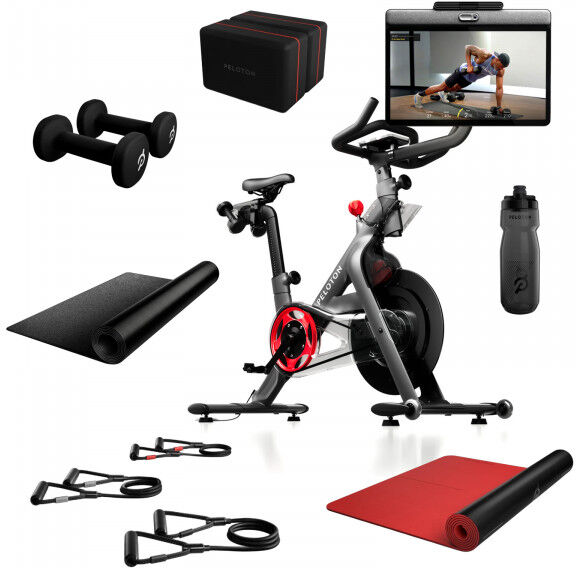
Peloton Cross Training Bike+ Powered by Peloton IQ Peloton Cross Training...PELOTON CROSS TRAINING BIKE+ The Peloton Cross Training Bike+ Powered by Peloton IQ takes your full-body training to the next level with real-time cardio and dynamic strength coaching that adapts to you. Designed for those who want to go further, the Bike+ evolves alongside you with innovative...2488,27 £*Shipping: 0,00 £Secure redirect to the provider
-
Little Brown Book Group No Limits: Blow the Cap Off Your Capacity by John C. Maxwell – Personal Growth & Leadership Development GuideNo Limits: Blow the CAP Off Your Capacity Description We often treat the word capacity as if it were a natural law of limitation. Unfortunately; most of us are much more comfortable defining what we perceive is off limits rather than what's possible. Could it be that many people have allowed what they perceive as capacity to define them? Have they allowed their perception to limit their attitudes about their potential? In his newest book; John Maxwell identifies 17 core capacities. Some of these are abilities we all already possess; such as energy; creativity and leadership. Others are aspects of our lives controlled by our choices; like our attitudes; character; and intentionality. Maxwell examines each of these 17 capacities; and provides clear and actionable advice on how you can increase your potential in each. He will guide you on how to identify; grow; and apply your critical capacities to your daily life. Once you've blown the 'cap' off your capacities; you'll find yourself more successful--and fulfilled--in your daily life.5,99 £*Shipping: 2,99 £Secure redirect to the provider
-
Thorsons Ultralearning: Accelerate Your Career, Master Hard Skills and Outsmart the CompetitionFuture-proof your career and maximize your competitive advantage by learning the skill necessary to stay relevant, reinvent yourself, and adapt to whatever the workplace throws your way in this essential guide. Faced with tumultuous economic times and rapid technological change, staying ahead in your career depends on continual learning―a lifelong mastery of new ideas, subjects, and skills. If you want to accomplish more and stand apart from everyone else, you need to become an ultralearner. Scott Young incorporates the latest research about the most effective learning methods and the stories of other ultralearners like himself―among them Ben Franklin, Judit Polgar, and Richard Feynman, as well as a host of others, such as little-known modern polymaths like Nigel Richards who won the World Championship of French Scrabble―without knowing French. Young documents the methods he and others have used and shows that, far from being an obscure skill limited to aggressive autodidacts, ultralearning is a powerful tool anyone can use to improve their career, studies, and life. Ultralearning explores this fascinating subculture, shares the nine principles behind every successful ultralearning project, and offers insights into how you can organize and execute a plan to learn anything deeply and quickly, without teachers or budget-busting tuition costs. Whether the goal is to be fluent in a language (or ten languages), earn the equivalent of a college degree in a fraction of the time, or master multiple skills to build a product or business from the ground up, the principles in Ultralearning will guide you to success.8,99 £*Shipping: 2,99 £Secure redirect to the provider
-
What is a cross-sectional image?
A cross-sectional image is a two-dimensional representation of a three-dimensional object or structure. It is typically obtained by slicing through the object or structure in a specific plane and capturing the internal details. Cross-sectional images are commonly used in medical imaging techniques such as CT scans and MRIs to visualize internal organs and tissues. These images provide valuable information about the anatomy and pathology of the subject being studied. **
-
What are cross-sectional functions in mathematics?
Cross-sectional functions in mathematics refer to functions that represent the intersection of a three-dimensional surface with a plane. These functions are used to analyze the behavior of a surface at a specific point or along a specific direction. By examining the cross-sectional functions of a surface, mathematicians can gain insights into its curvature, slope, and other properties. This concept is commonly used in calculus and differential geometry to study the behavior of surfaces in three-dimensional space. **
-
How do you calculate the cross-sectional area?
To calculate the cross-sectional area of a shape, you need to determine the shape of the cross-section (e.g., circle, square, triangle), measure the dimensions of the shape (e.g., radius, side lengths), and then use the appropriate formula to find the area. For example, the cross-sectional area of a circle can be calculated using the formula A = πr^2, where r is the radius of the circle. Similarly, the cross-sectional area of a square can be calculated by multiplying the length of one side by itself (A = side length x side length). **
-
What is the cross-sectional shape of wood?
The cross-sectional shape of wood can vary depending on the type of tree it comes from. In general, wood has a circular or oval cross-sectional shape due to the growth rings and structure of the tree trunk. This shape is a result of the way trees grow, with new layers of wood being added each year, creating distinct growth rings. Additionally, the presence of medullary rays can give wood a radial pattern when viewed in cross-section. **
Similar search terms for Cross-sectional
-
Perfect Picks Market Geometric Building Blocks Set For Kids Early Education Intelligence Development Toy Geometric Building Blocks Set For Kids Early Education Intelligence Development ToyUnlock your child's potential with this early education equipment designed to stimulate creativity and intelligence! This geometric set is the perfect building block toy for boys, helping to develop problemsolving skills while having fun. The...35,97 $*Shipping: 0,00 $Secure redirect to the provider
-
Scholastic Teaching Resources The Educator's Guide to Understanding Child DevelopmentThe Yale Child Study Center Guide to Understanding Your Child was a landmark essential resource for parents, offering accessible information on child development based on a deep understanding of brain research and psychology. Now that knowledge has...35,99 $*Shipping: 0,00 $Secure redirect to the provider
-
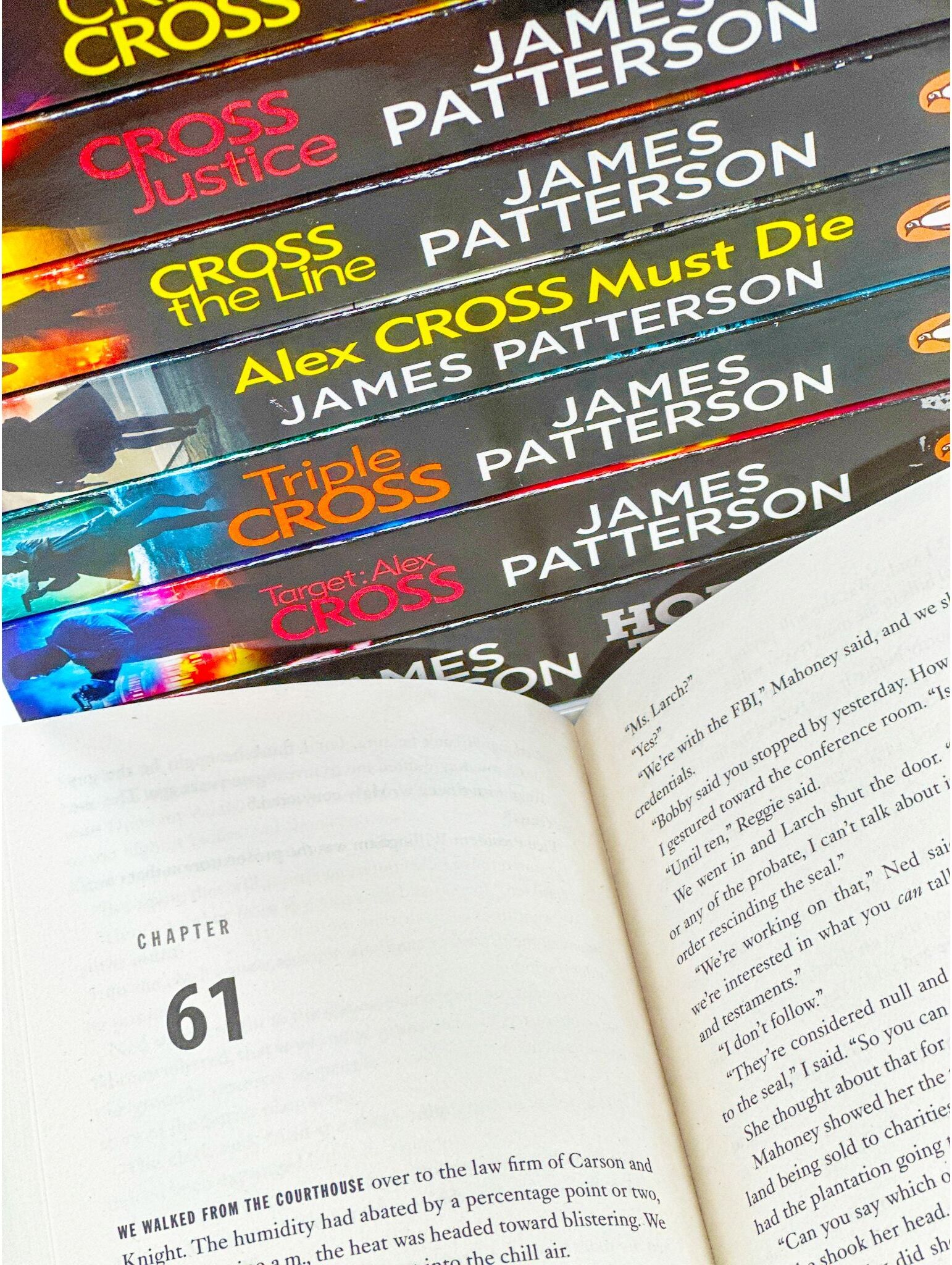
Penguin/Arrow Books James Patterson Alex Cross Series 10 Books Collection Set (Fear No Evil, The People vs. Alex Cross, Criss Cross, Cross the Line, Deadly Cross & More)James Patterson Alex Cross Series 10 Books Collection Set (Fear No Evil, The People vs. Alex Cross, Criss Cross, Cross the Line, Deadly Cross & More) Follow one of fiction’s most iconic detectives in the James Patterson Alex Cross Series – 10 Books Collection Set. This gripping collection features bestselling crime thrillers starring Alex Cross, a brilliant detective and forensic psychologist known for solving the toughest cases while facing dangerous enemies and personal challenges. Packed with fast-paced action, shocking twists, and high-stakes investigations, these novels showcase why the Alex Cross series is one of the best-loved crime thriller franchises worldwide. Titles in this Set: Fear No Evil The People vs. Alex Cross Criss Cross Cross Justice Cross the Line Deadly Cross Alex Cross Must Die Triple Cross Target: Alex Cross Hope to Die24,99 £*Shipping: 2,99 £Secure redirect to the provider
-
Peloton Cross Training Bike+ Powered by Peloton IQ Peloton Cross Training...PELOTON CROSS TRAINING BIKE+ The Peloton Cross Training Bike+ Powered by Peloton IQ takes your full-body training to the next level with real-time cardio and dynamic strength coaching that adapts to you. Designed for those who want to go further, the Bike+ evolves alongside you with innovative...2488,27 £*Shipping: 0,00 £Secure redirect to the provider
-
What are the cross-sectional measures in mathematics?
Cross-sectional measures in mathematics refer to the analysis of data at a specific point in time, rather than over a period of time. This type of analysis allows for the comparison of different variables at a single point in time, providing a snapshot of the relationships between those variables. Cross-sectional measures are commonly used in statistics and econometrics to understand the relationships between different factors in a given population or sample. Examples of cross-sectional measures include correlations, regressions, and descriptive statistics. **
-
Why is quality management referred to as a so-called cross-sectional function?
Quality management is referred to as a cross-sectional function because it involves various departments and functions within an organization. It cuts across different areas such as production, marketing, and customer service to ensure that quality standards are met at every stage of the product or service lifecycle. Quality management requires collaboration and coordination between different teams to achieve the desired level of quality and customer satisfaction. It is not limited to a single department but involves the entire organization in maintaining and improving quality standards. **
-
How do you calculate resistance with cross-sectional area?
To calculate resistance with cross-sectional area, you can use the formula R = ρ * (L/A), where R is the resistance, ρ is the resistivity of the material, L is the length of the material, and A is the cross-sectional area. By rearranging the formula, you can solve for resistance by multiplying the resistivity by the length and dividing by the cross-sectional area. This formula shows that resistance is inversely proportional to the cross-sectional area, meaning that as the cross-sectional area increases, the resistance decreases. **
-
How to perform a cross-sectional calculation of cables?
To perform a cross-sectional calculation of cables, you will need to determine the cross-sectional area of the cable. This can be done by measuring the diameter of the cable and then using the formula for the area of a circle (A = πr^2) to calculate the cross-sectional area. Once you have the cross-sectional area, you can then use it to calculate the cable's resistance, current-carrying capacity, and voltage drop. It is important to ensure that the cable's cross-sectional area meets the requirements for the specific application and complies with relevant standards and regulations. **
* All prices are inclusive of VAT and, if applicable, plus shipping costs. The offer information is based on the details provided by the respective shop and is updated through automated processes. Real-time updates do not occur, so deviations can occur in individual cases. ** Note: Parts of this content were created by AI.