Buy management-school.eu ?
We are moving the project
management-school.eu .
Are you interested in purchasing the domain
management-school.eu ?
domain@kv-gmbh.de · 0541-91531010
Buy management-school.eu ?
What is the difference between school education and professional career development?
School education focuses on providing students with a broad range of knowledge and skills across various subjects, while professional career development is more specialized and focused on preparing individuals for specific careers or industries. School education typically covers a wide range of subjects, including math, science, language arts, and social studies, while professional career development often involves specialized training, certifications, and hands-on experience in a particular field. Additionally, school education is often more theoretical and academic, while professional career development is more practical and geared towards preparing individuals for the workforce. **
What is the difference between the major axis and minor axis of the Earth's orbit?
The major axis of the Earth's orbit is the longest diameter of the elliptical path followed by the Earth around the Sun, while the minor axis is the shortest diameter perpendicular to the major axis. The major axis determines the distance between the Earth and the Sun at its closest and farthest points (perihelion and aphelion), affecting the planet's temperature and seasons. The minor axis, on the other hand, does not have a significant impact on Earth's climate or orbit dynamics. **


Similar search terms for Axis-Spot-The-Difference
Top-Angebote
Products related to Axis-Spot-The-Difference:
-
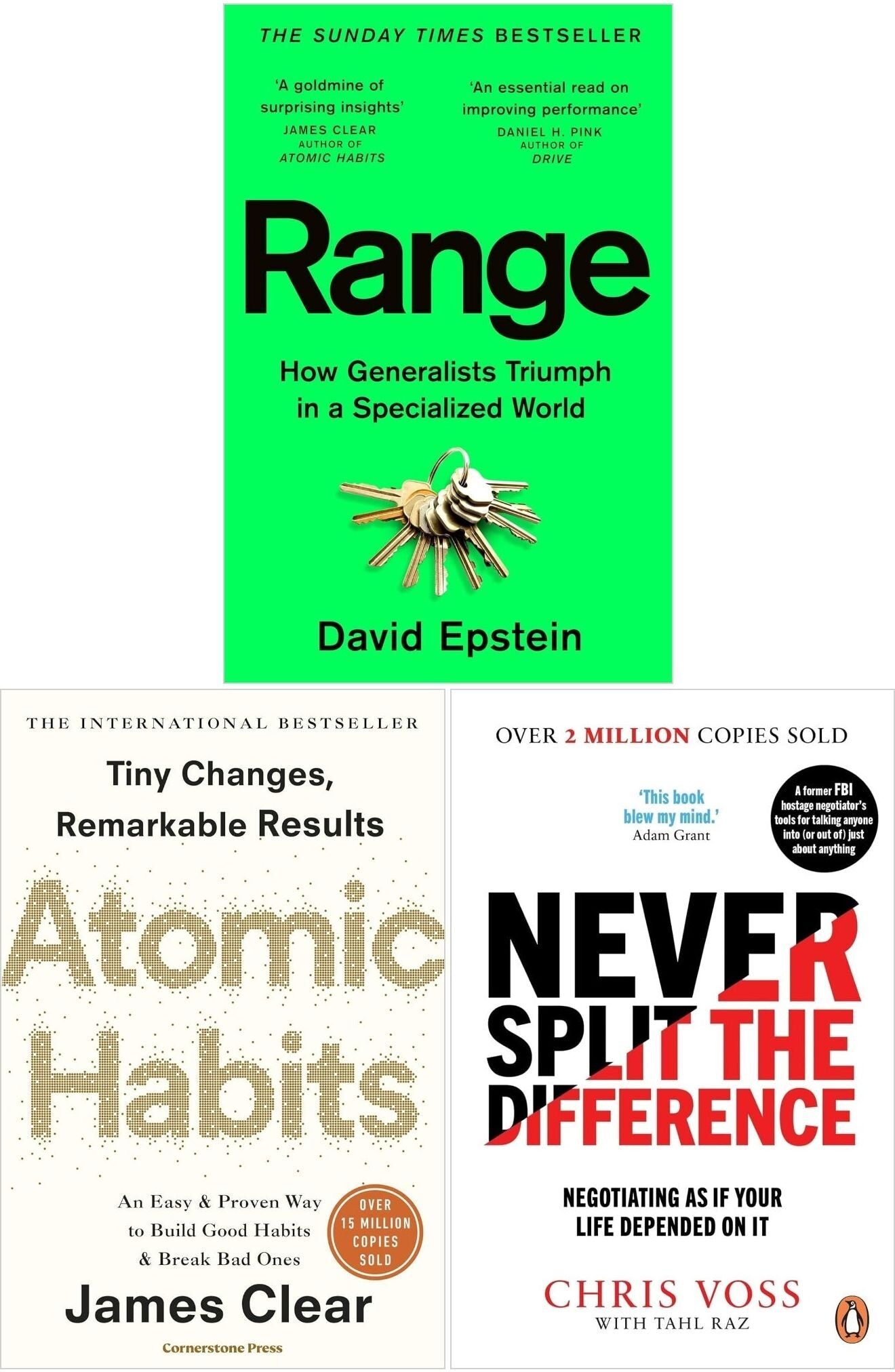
Penguin Range, Never Split the Difference and Atomic Habits 3 Books SetRange In this landmark book, David Epstein shows you that the way to succeed is by sampling widely, gaining a breadth of experiences, taking detours, experimenting relentlessly, juggling many interests – in other words, by developing range. Studying the world's most successful athletes, artists, musicians, inventors and scientists, Epstein demonstrates why in most fields – especially those that are complex and unpredictable – generalists, not specialists are primed to excel. No matter what you do, where you are in life, whether you are a teacher, student, scientist, business analyst, parent, job hunter, retiree, you will see the world differently after you've read Range. You'll understand better how we solve problems, how we learn and how we succeed. You'll see why failing a test is the best way to learn and why frequent quitters end up with the most fulfilling careers. Never Split the Difference After a stint policing the rough streets of Kansas City, Missouri, Chris Voss joined the FBI, where his career as a kidnapping negotiator brought him face-to-face with bank robbers, gang leaders and terrorists. Never Split the Difference takes you inside his world of high-stakes negotiations, revealing the nine key principles that helped Voss and his colleagues succeed when it mattered the most - when people's lives were at stake. Rooted in the real-life experiences of an intelligence professional at the top of his game, Never Split the Difference will give you the competitive edge in any discussion. Atomic Habits Transform your life with tiny changes in behaviour, starting now. People think that when you want to change your life, you need to think big. But world-renowned habits expert James Clear has discovered another way. He knows that real change comes from the compound effect of hundreds of small decisions: doing two push-ups a day, waking up five minutes early, or holding a single short phone call. He calls them atomic habits. In this ground-breaking book, Clears reveals exactly how these minuscule changes can grow into such life-altering outcomes.14,99 £*Shipping: 2,99 £Secure redirect to the provider
-
Inspired Finds Reusable Find The Difference Game Wipe Clean Activity Cards For Kids Focus And Attention Training intermediateThese reusable wipeclean cards turn quiet time into a confidencebuilding challenge that kids actually enjoy. Designed as an attention training game, each page invites children to spot mistakes, differences, or hidden details while practicing...34,99 $*Shipping: 0,00 $Secure redirect to the provider
-
Penguin Never Split the Difference: Negotiating as if Your Life Depended on ItA former FBI hostage negotiator offers a new, field-tested approach to - effective in any situation.'Riveting' Adam Grant'Stupendous' The Week'Brilliant' GuardianAfter a stint policing the rough streets of Kansas City, Missouri, Chris Voss joined the FBI, where his career as a kidnapping negotiator brought him face-to-face with bank robbers, gang leaders and terrorists. Never Split the Difference takes you inside his world of high-stakes negotiations, revealing the nine key principles that helped Voss and his colleagues succeed when it mattered the most - when people's lives were at stake.Rooted in the real-life experiences of an intelligence professional at the top of his game, Never Split the Difference will give you the competitive edge in any discussion. PRAISE FOR NEVER SPLIT THE DIFFERENCE'My pick for book of the year.' Forbes'Who better to learn [negotiation] from than Chris Voss, whose skills have saved lives and averted disaster?' Daily Mail'Filled with insights that apply to everyday negotiations.' Business Insider'It's rare that a book is so gripping and entertaining while still being actionable and applicable.' Inc.'A business book you won't be able to put down.' Fortune7,99 £*Shipping: 2,99 £Secure redirect to the provider
-
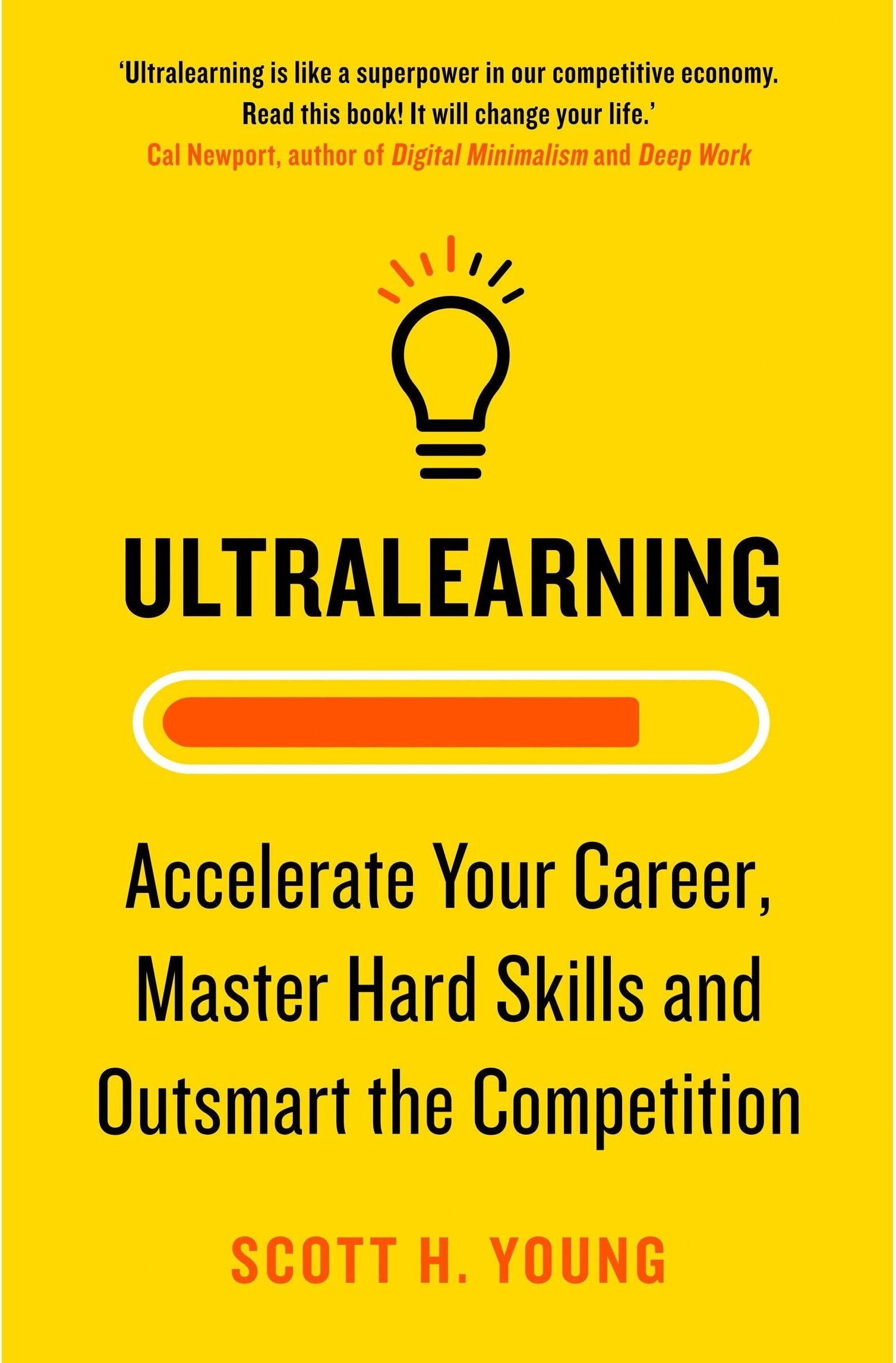
Thorsons Ultralearning: Accelerate Your Career, Master Hard Skills and Outsmart the CompetitionFuture-proof your career and maximize your competitive advantage by learning the skill necessary to stay relevant, reinvent yourself, and adapt to whatever the workplace throws your way in this essential guide. Faced with tumultuous economic times and rapid technological change, staying ahead in your career depends on continual learning―a lifelong mastery of new ideas, subjects, and skills. If you want to accomplish more and stand apart from everyone else, you need to become an ultralearner. Scott Young incorporates the latest research about the most effective learning methods and the stories of other ultralearners like himself―among them Ben Franklin, Judit Polgar, and Richard Feynman, as well as a host of others, such as little-known modern polymaths like Nigel Richards who won the World Championship of French Scrabble―without knowing French. Young documents the methods he and others have used and shows that, far from being an obscure skill limited to aggressive autodidacts, ultralearning is a powerful tool anyone can use to improve their career, studies, and life. Ultralearning explores this fascinating subculture, shares the nine principles behind every successful ultralearning project, and offers insights into how you can organize and execute a plan to learn anything deeply and quickly, without teachers or budget-busting tuition costs. Whether the goal is to be fluent in a language (or ten languages), earn the equivalent of a college degree in a fraction of the time, or master multiple skills to build a product or business from the ground up, the principles in Ultralearning will guide you to success.8,99 £*Shipping: 2,99 £Secure redirect to the provider


-
What is the difference between an axis of symmetry and symmetry about an axis?
An axis of symmetry is a line that divides a shape into two mirror-image halves. This means that if you fold the shape along the axis, the two halves will perfectly overlap. On the other hand, symmetry about an axis refers to the property of a shape where it can be rotated around an axis and still look the same. In other words, if you rotate the shape 180 degrees around the axis, it will still appear unchanged. While an axis of symmetry is a specific line that divides a shape into two equal halves, symmetry about an axis refers to the overall property of a shape being unchanged when rotated around an axis. **
-
Which axis, the y-axis or the z-axis?
The y-axis is the vertical axis on a standard Cartesian coordinate system, while the z-axis is the vertical axis in a three-dimensional Cartesian coordinate system. The y-axis is typically used to represent the vertical position or value in a two-dimensional graph, while the z-axis is used to represent the vertical position or value in a three-dimensional graph. Therefore, the choice between the y-axis and the z-axis depends on whether you are working in a two-dimensional or three-dimensional space. **
-
What is the difference between axis symmetry, axis of symmetry, rotational symmetry, and point symmetry?
Axis symmetry refers to the property of a shape being symmetrical with respect to an axis, meaning that if the shape is folded along the axis, the two halves will coincide. The axis of symmetry is the line along which the shape is symmetrical. Rotational symmetry refers to the property of a shape being able to be rotated by a certain angle and still look the same. Point symmetry refers to the property of a shape being symmetrical with respect to a central point, meaning that if the shape is rotated 180 degrees around the point, it will look the same. **
-
What is the difference between calculating the area under a curve along the x-axis and the y-axis?
Calculating the area under a curve along the x-axis involves finding the area between the curve and the x-axis, while calculating the area under a curve along the y-axis involves finding the area between the curve and the y-axis. When calculating the area under a curve along the x-axis, the integral is taken with respect to x, and when calculating the area under a curve along the y-axis, the integral is taken with respect to y. The method of calculation and the interpretation of the result differ depending on whether the area is being calculated along the x-axis or the y-axis. **


What is the difference between axis symmetry and point symmetry?
Axis symmetry refers to a shape or object being symmetrical with respect to an axis, meaning that if you were to fold the shape along the axis, the two halves would perfectly overlap. Point symmetry, on the other hand, refers to a shape or object being symmetrical with respect to a single point, meaning that if you were to rotate the shape 180 degrees around that point, it would look the same. In essence, axis symmetry involves reflection across a line, while point symmetry involves rotation around a point. **
Where is the big difference between the Axis powers and the Allies?
The big difference between the Axis powers and the Allies during World War II was their ideologies and goals. The Axis powers, including Germany, Italy, and Japan, sought to expand their territories and establish authoritarian rule over other nations. In contrast, the Allies, including the United States, United Kingdom, Soviet Union, and others, aimed to defend democracy, human rights, and the sovereignty of nations. This fundamental difference in their objectives led to a fierce and prolonged conflict between the two sides. **
Top-Angebote
Products related to Axis-Spot-The-Difference:
-
Axis Spot The Difference Facial Blemish Treatment 15mLA skin-care product for oily or blemish-prone skin. Spot The Difference Blemish Treatment is expertly formulated for acne-prone, oily, and sensitive skin, providing effective relief from breakouts and blemishes. This light gel texture glides onto the skin, delivering hydration while restoring the skin barrier.15,32 £*Shipping: 4,22 £Secure redirect to the provider
-
Axis Dark Spot Correcting Glow Serum - for Acne-Prone and Sensitive Skin 50mLA facial serum for dark spots and uneven skin tone. Enriched with plant-derived Squalane, this serum maintains moisture, ensuring an enduring radiant and healthy complexion on the go. It can also be used as a spot treatment. Ideal for addressing concerns including acne, oily skin, uneven texture, and hyperpigmentation.23,59 £*Shipping: 5,34 £Secure redirect to the provider
-
Penguin Range, Never Split the Difference and Atomic Habits 3 Books SetRange In this landmark book, David Epstein shows you that the way to succeed is by sampling widely, gaining a breadth of experiences, taking detours, experimenting relentlessly, juggling many interests – in other words, by developing range. Studying the world's most successful athletes, artists, musicians, inventors and scientists, Epstein demonstrates why in most fields – especially those that are complex and unpredictable – generalists, not specialists are primed to excel. No matter what you do, where you are in life, whether you are a teacher, student, scientist, business analyst, parent, job hunter, retiree, you will see the world differently after you've read Range. You'll understand better how we solve problems, how we learn and how we succeed. You'll see why failing a test is the best way to learn and why frequent quitters end up with the most fulfilling careers. Never Split the Difference After a stint policing the rough streets of Kansas City, Missouri, Chris Voss joined the FBI, where his career as a kidnapping negotiator brought him face-to-face with bank robbers, gang leaders and terrorists. Never Split the Difference takes you inside his world of high-stakes negotiations, revealing the nine key principles that helped Voss and his colleagues succeed when it mattered the most - when people's lives were at stake. Rooted in the real-life experiences of an intelligence professional at the top of his game, Never Split the Difference will give you the competitive edge in any discussion. Atomic Habits Transform your life with tiny changes in behaviour, starting now. People think that when you want to change your life, you need to think big. But world-renowned habits expert James Clear has discovered another way. He knows that real change comes from the compound effect of hundreds of small decisions: doing two push-ups a day, waking up five minutes early, or holding a single short phone call. He calls them atomic habits. In this ground-breaking book, Clears reveals exactly how these minuscule changes can grow into such life-altering outcomes.14,99 £*Shipping: 2,99 £Secure redirect to the provider
-
Inspired Finds Reusable Find The Difference Game Wipe Clean Activity Cards For Kids Focus And Attention Training intermediateThese reusable wipeclean cards turn quiet time into a confidencebuilding challenge that kids actually enjoy. Designed as an attention training game, each page invites children to spot mistakes, differences, or hidden details while practicing...34,99 $*Shipping: 0,00 $Secure redirect to the provider
-
What is the difference between school education and professional career development?
School education focuses on providing students with a broad range of knowledge and skills across various subjects, while professional career development is more specialized and focused on preparing individuals for specific careers or industries. School education typically covers a wide range of subjects, including math, science, language arts, and social studies, while professional career development often involves specialized training, certifications, and hands-on experience in a particular field. Additionally, school education is often more theoretical and academic, while professional career development is more practical and geared towards preparing individuals for the workforce. **
-
What is the difference between the major axis and minor axis of the Earth's orbit?
The major axis of the Earth's orbit is the longest diameter of the elliptical path followed by the Earth around the Sun, while the minor axis is the shortest diameter perpendicular to the major axis. The major axis determines the distance between the Earth and the Sun at its closest and farthest points (perihelion and aphelion), affecting the planet's temperature and seasons. The minor axis, on the other hand, does not have a significant impact on Earth's climate or orbit dynamics. **
-
What is the difference between an axis of symmetry and symmetry about an axis?
An axis of symmetry is a line that divides a shape into two mirror-image halves. This means that if you fold the shape along the axis, the two halves will perfectly overlap. On the other hand, symmetry about an axis refers to the property of a shape where it can be rotated around an axis and still look the same. In other words, if you rotate the shape 180 degrees around the axis, it will still appear unchanged. While an axis of symmetry is a specific line that divides a shape into two equal halves, symmetry about an axis refers to the overall property of a shape being unchanged when rotated around an axis. **
-
Which axis, the y-axis or the z-axis?
The y-axis is the vertical axis on a standard Cartesian coordinate system, while the z-axis is the vertical axis in a three-dimensional Cartesian coordinate system. The y-axis is typically used to represent the vertical position or value in a two-dimensional graph, while the z-axis is used to represent the vertical position or value in a three-dimensional graph. Therefore, the choice between the y-axis and the z-axis depends on whether you are working in a two-dimensional or three-dimensional space. **
Similar search terms for Axis-Spot-The-Difference
-
Penguin Never Split the Difference: Negotiating as if Your Life Depended on ItA former FBI hostage negotiator offers a new, field-tested approach to - effective in any situation.'Riveting' Adam Grant'Stupendous' The Week'Brilliant' GuardianAfter a stint policing the rough streets of Kansas City, Missouri, Chris Voss joined the FBI, where his career as a kidnapping negotiator brought him face-to-face with bank robbers, gang leaders and terrorists. Never Split the Difference takes you inside his world of high-stakes negotiations, revealing the nine key principles that helped Voss and his colleagues succeed when it mattered the most - when people's lives were at stake.Rooted in the real-life experiences of an intelligence professional at the top of his game, Never Split the Difference will give you the competitive edge in any discussion. PRAISE FOR NEVER SPLIT THE DIFFERENCE'My pick for book of the year.' Forbes'Who better to learn [negotiation] from than Chris Voss, whose skills have saved lives and averted disaster?' Daily Mail'Filled with insights that apply to everyday negotiations.' Business Insider'It's rare that a book is so gripping and entertaining while still being actionable and applicable.' Inc.'A business book you won't be able to put down.' Fortune7,99 £*Shipping: 2,99 £Secure redirect to the provider
-
Thorsons Ultralearning: Accelerate Your Career, Master Hard Skills and Outsmart the CompetitionFuture-proof your career and maximize your competitive advantage by learning the skill necessary to stay relevant, reinvent yourself, and adapt to whatever the workplace throws your way in this essential guide. Faced with tumultuous economic times and rapid technological change, staying ahead in your career depends on continual learning―a lifelong mastery of new ideas, subjects, and skills. If you want to accomplish more and stand apart from everyone else, you need to become an ultralearner. Scott Young incorporates the latest research about the most effective learning methods and the stories of other ultralearners like himself―among them Ben Franklin, Judit Polgar, and Richard Feynman, as well as a host of others, such as little-known modern polymaths like Nigel Richards who won the World Championship of French Scrabble―without knowing French. Young documents the methods he and others have used and shows that, far from being an obscure skill limited to aggressive autodidacts, ultralearning is a powerful tool anyone can use to improve their career, studies, and life. Ultralearning explores this fascinating subculture, shares the nine principles behind every successful ultralearning project, and offers insights into how you can organize and execute a plan to learn anything deeply and quickly, without teachers or budget-busting tuition costs. Whether the goal is to be fluent in a language (or ten languages), earn the equivalent of a college degree in a fraction of the time, or master multiple skills to build a product or business from the ground up, the principles in Ultralearning will guide you to success.8,99 £*Shipping: 2,99 £Secure redirect to the provider
-
Farmstay Visible Difference hand cream 100 mlFarmstay Visible Difference, 100 ml, Hand Creams for Women, Farmstay Visible Difference cream moisturises your hands perfectly and gives them the nourishment they need. Characteristics: is absorbed quickly hydrates and nourishes the skin leaves the skin soft and smooth How to use: Apply hand cream as needed and massage until the cream is absorbed.2,00 £*Shipping: 3,99 £Secure redirect to the provider
-
Elisabeth Arden Visible Difference Hydragel 75ml 75mlCombat dry skin once and for all with the Visible Difference Replenishing HydraGel Complex. This lightweight, oil-free gel cream melts into skin to deliver an immediate cooling effect and provide continuous hydration for a full 24 hours. Formulated with Hyaluronic Acid and botanicals like Tree Mushroom Extract, Visible Difference Replenishing HydraGel evens skin tone and texture, minimizes the appearance of fine lines and wrinkles, and leaves skin looking moisturised, smooth and glowing. This oil-free water gel is formulated to plump skin with 24-hour hydration and refine the look of pores. Size: 75ml13,70 £*Shipping: 3,99 £Secure redirect to the provider
-
What is the difference between axis symmetry, axis of symmetry, rotational symmetry, and point symmetry?
Axis symmetry refers to the property of a shape being symmetrical with respect to an axis, meaning that if the shape is folded along the axis, the two halves will coincide. The axis of symmetry is the line along which the shape is symmetrical. Rotational symmetry refers to the property of a shape being able to be rotated by a certain angle and still look the same. Point symmetry refers to the property of a shape being symmetrical with respect to a central point, meaning that if the shape is rotated 180 degrees around the point, it will look the same. **
-
What is the difference between calculating the area under a curve along the x-axis and the y-axis?
Calculating the area under a curve along the x-axis involves finding the area between the curve and the x-axis, while calculating the area under a curve along the y-axis involves finding the area between the curve and the y-axis. When calculating the area under a curve along the x-axis, the integral is taken with respect to x, and when calculating the area under a curve along the y-axis, the integral is taken with respect to y. The method of calculation and the interpretation of the result differ depending on whether the area is being calculated along the x-axis or the y-axis. **
-
What is the difference between axis symmetry and point symmetry?
Axis symmetry refers to a shape or object being symmetrical with respect to an axis, meaning that if you were to fold the shape along the axis, the two halves would perfectly overlap. Point symmetry, on the other hand, refers to a shape or object being symmetrical with respect to a single point, meaning that if you were to rotate the shape 180 degrees around that point, it would look the same. In essence, axis symmetry involves reflection across a line, while point symmetry involves rotation around a point. **
-
Where is the big difference between the Axis powers and the Allies?
The big difference between the Axis powers and the Allies during World War II was their ideologies and goals. The Axis powers, including Germany, Italy, and Japan, sought to expand their territories and establish authoritarian rule over other nations. In contrast, the Allies, including the United States, United Kingdom, Soviet Union, and others, aimed to defend democracy, human rights, and the sovereignty of nations. This fundamental difference in their objectives led to a fierce and prolonged conflict between the two sides. **
* All prices are inclusive of VAT and, if applicable, plus shipping costs. The offer information is based on the details provided by the respective shop and is updated through automated processes. Real-time updates do not occur, so deviations can occur in individual cases. ** Note: Parts of this content were created by AI.