Buy management-school.eu ?
We are moving the project
management-school.eu .
Are you interested in purchasing the domain
management-school.eu ?
domain@kv-gmbh.de · 0541-91531010
Buy management-school.eu ?
What factors stop growth?
Several factors can stop growth, including lack of access to resources such as education, healthcare, and economic opportunities. Inadequate nutrition and poor living conditions can also hinder physical growth and development. Additionally, environmental factors such as pollution and climate change can have negative effects on growth. Finally, social and political factors such as discrimination, conflict, and instability can create barriers to growth and development. **
What are growth factors or growth rates?
Growth factors or growth rates refer to the percentage increase in a specific variable over a certain period of time. In the context of economics, growth rates typically refer to the increase in a country's GDP or the expansion of a company's revenue. These factors are important indicators of the health and development of an economy or business, as they show how quickly it is expanding or contracting. Understanding growth factors or growth rates can help policymakers, investors, and business leaders make informed decisions about future strategies and investments. **


Similar search terms for Factors
Top-Angebote
Products related to Factors:
-
Little Brown Book Group No Limits: Blow the Cap Off Your Capacity by John C. Maxwell – Personal Growth & Leadership Development GuideNo Limits: Blow the CAP Off Your Capacity Description We often treat the word capacity as if it were a natural law of limitation. Unfortunately; most of us are much more comfortable defining what we perceive is off limits rather than what's possible. Could it be that many people have allowed what they perceive as capacity to define them? Have they allowed their perception to limit their attitudes about their potential? In his newest book; John Maxwell identifies 17 core capacities. Some of these are abilities we all already possess; such as energy; creativity and leadership. Others are aspects of our lives controlled by our choices; like our attitudes; character; and intentionality. Maxwell examines each of these 17 capacities; and provides clear and actionable advice on how you can increase your potential in each. He will guide you on how to identify; grow; and apply your critical capacities to your daily life. Once you've blown the 'cap' off your capacities; you'll find yourself more successful--and fulfilled--in your daily life.5,99 £*Shipping: 2,99 £Secure redirect to the provider
-
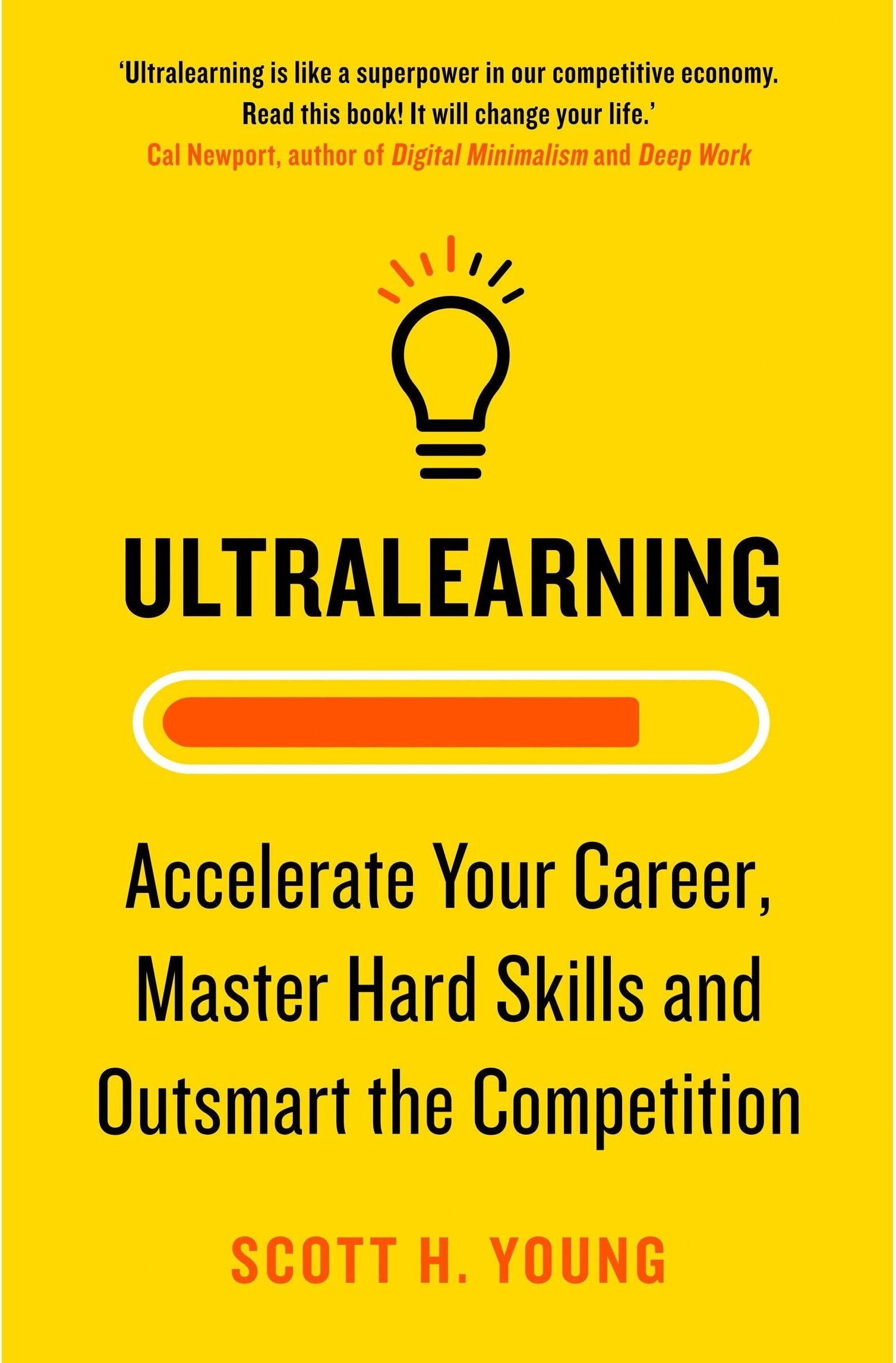
Thorsons Ultralearning: Accelerate Your Career, Master Hard Skills and Outsmart the CompetitionFuture-proof your career and maximize your competitive advantage by learning the skill necessary to stay relevant, reinvent yourself, and adapt to whatever the workplace throws your way in this essential guide. Faced with tumultuous economic times and rapid technological change, staying ahead in your career depends on continual learning―a lifelong mastery of new ideas, subjects, and skills. If you want to accomplish more and stand apart from everyone else, you need to become an ultralearner. Scott Young incorporates the latest research about the most effective learning methods and the stories of other ultralearners like himself―among them Ben Franklin, Judit Polgar, and Richard Feynman, as well as a host of others, such as little-known modern polymaths like Nigel Richards who won the World Championship of French Scrabble―without knowing French. Young documents the methods he and others have used and shows that, far from being an obscure skill limited to aggressive autodidacts, ultralearning is a powerful tool anyone can use to improve their career, studies, and life. Ultralearning explores this fascinating subculture, shares the nine principles behind every successful ultralearning project, and offers insights into how you can organize and execute a plan to learn anything deeply and quickly, without teachers or budget-busting tuition costs. Whether the goal is to be fluent in a language (or ten languages), earn the equivalent of a college degree in a fraction of the time, or master multiple skills to build a product or business from the ground up, the principles in Ultralearning will guide you to success.8,99 £*Shipping: 2,99 £Secure redirect to the provider
-
Macmillan Business How Big Things Get Done: The Surprising Factors Behind Every Successful Project, from Home Renovations to Space ExplorationHow Big Things Get Done: The Surprising Factors Behind Every Successful Project, from Home Renovations to Space Exploration Nothing is more inspiring than a big vision that becomes a triumphant new reality. Think of how Apple’s iPod went from a project with a single employee to an enormously successful product launch in eleven months. But such successes are the exception. Consider how London’s Crossrail project delivered five years late and billions over budget. More modest endeavours, whether launching a small business, organizing a conference, or just finishing a work project on time, also commonly fail. Why? Understanding what distinguishes the triumphs from the failures has been the life’s work of Oxford professor Bent Flyvbjerg. In How Big Things Get Done, he identifies the errors that lead projects to fail, and the research-based principles that will make yours succeed: Understand your odds. If you don’t know them, you won’t win. Plan slow, act fast. Getting to the action quick feels right. But it’s wrong. Think right to left. Start with your goal, then identify the steps to get there. Find your Lego. Big is best built from small. Master the unknown unknowns. Most think they can’t, so they fail. Flyvbjerg shows how you can. Full of vivid examples ranging from the building of the Sydney Opera House to the making of the latest Pixar blockbusters, How Big Things Get Done reveals how to get any ambitious project done – on time and on budget.2,99 £*Shipping: 1,99 £Secure redirect to the provider
-
Perfect Picks Market Geometric Building Blocks Set For Kids Early Education Intelligence Development Toy Geometric Building Blocks Set For Kids Early Education Intelligence Development ToyUnlock your child's potential with this early education equipment designed to stimulate creativity and intelligence! This geometric set is the perfect building block toy for boys, helping to develop problemsolving skills while having fun. The...35,97 $*Shipping: 0,00 $Secure redirect to the provider



-
Which upbringing factors favor a neurotic development?
Several factors in upbringing can favor a neurotic development, including inconsistent or harsh parenting, neglect, abuse, and exposure to chronic stress or trauma. Children who grow up in environments where their emotional needs are not consistently met, or where they experience unpredictable or threatening situations, are more likely to develop neurotic tendencies. Additionally, overprotective or controlling parenting styles can also contribute to the development of neurotic traits, as they may inhibit a child's ability to develop healthy coping mechanisms and resilience. **
-
What do push factors and pull factors mean?
Push factors are circumstances that force individuals to leave their current location, such as poverty, political instability, or lack of job opportunities. Pull factors, on the other hand, are conditions that attract individuals to a new location, such as better job prospects, higher quality of life, or political stability. Both push and pull factors play a significant role in influencing migration patterns and decisions. **
-
What are the factors inhibiting and promoting development in Angola?
In Angola, factors inhibiting development include a history of political instability and corruption, which have hindered economic growth and investment. Additionally, the reliance on oil exports has made the economy vulnerable to fluctuations in global oil prices. Poor infrastructure, limited access to education and healthcare, and a high poverty rate also contribute to the challenges facing development in Angola. On the other hand, factors promoting development in Angola include the country's rich natural resources, such as oil, diamonds, and other minerals, which have the potential to drive economic growth if managed effectively. Efforts to diversify the economy, improve governance, and invest in infrastructure and human capital are also key factors that can help promote development in Angola. Additionally, the country's strategic location and potential for regional trade and investment present opportunities for growth and development. **
-
Why are soft skills considered as success factors in the workplace? Can soft skills be learned in school? Are soft skills taught in school?
Soft skills are considered success factors in the workplace because they are essential for effective communication, teamwork, problem-solving, and leadership. These skills are crucial for building strong relationships with colleagues and clients, managing conflicts, and adapting to change. While technical skills are important, it is the soft skills that often determine an individual's success in their career. Soft skills can be learned in school through various activities such as group projects, presentations, and extracurricular activities. Schools can also incorporate specific soft skills training programs into their curriculum to help students develop these important skills. However, the extent to which soft skills are taught in school varies, and there is often a greater emphasis on academic and technical skills. **


To which factors do biotic and abiotic factors belong?
Biotic factors belong to living organisms such as plants, animals, fungi, and bacteria, while abiotic factors belong to non-living elements such as temperature, water, sunlight, soil, and air. Both biotic and abiotic factors play crucial roles in shaping ecosystems and influencing the distribution and abundance of species within those ecosystems. They interact with each other to create complex and dynamic environments. **
What location factors can be mentioned for the development of cities?
Several location factors can be mentioned for the development of cities, including proximity to natural resources, access to transportation networks, availability of labor, and favorable climate conditions. Additionally, the presence of educational and healthcare facilities, as well as cultural and recreational amenities, can also contribute to the development of cities. Furthermore, government policies and regulations, as well as historical and cultural significance, can also play a role in the development of cities. **
Top-Angebote
Products related to Factors:
-
Revuele Glowify Grow Younger Power Serum Growth Factors firming facial serum 30 mlRevuele Glowify Grow Younger Power Serum Growth Factors, 30 ml, Skin Serums for Women, Does it feel as though your skin needs something more than just the care provided by a cream? The Revuele Glowify Grow Younger Power Serum Growth Factors facial serum is the perfect product to enrich your skincare routine – it pampers the skin and delivers an intensive treatment. With its high concentration of active ingredients, the effect it has on your skin is far more pronounced and faster than with a face cream. Its liquid consistency makes application easier, as it is absorbed into the skin very well. Characteristics: helps to smooth out wrinkles and fine lines firms the facial contours restores freshness and youthful beauty to your skin helps remove signs of skin ageing smoothes out uneven skin texture promotes collagen production Ingredients: vegan product hyaluronic acid – binds large quantities of water and hydrates intensively collagen – binds a large amount of water, keeping skin hydrated for a long time, and thus promotes a youthful, full and elastic appearance of skin and a reduction in the visibility of wrinkles panthenol – has a hydrating and soothing effect, relieves irritation, redness, dryness and discomfort How to use: Dab an appropriate amount of the serum gently into clean skin with your fingertips. Continue with your favourite day/night care products.3,60 £*Shipping: 3,99 £Secure redirect to the provider
-
Penguin/Pan Macmillan Designing Your Life, Radical Candor and Quiet 3 Books Collection Set Personal Development, Leadership, Career Success & Self ImprovementDesigning Your Life, Radical Candor and Quiet 3 Books Collection Set Designing Your Life by Bill Burnett & Dave Evans Stanford innovators Bill Burnett and Dave Evans show us how design thinking can help us create a life that is both meaningful and fulfilling, regardless of who and where we are, our careers and our age. Designing Your Life puts forward the idea that the same design thinking responsible for amazing technology, products and spaces can be used to build towards a better life and career by a design of your own making. Radical Candor by Kim Scott Radical Candor by Kim Scott is a groundbreaking leadership and communication guide that teaches how to give feedback effectively, build trust, and create high-performing teams without becoming harsh—or avoiding difficult conversations. Based on Scott’s experience at Google, Apple and Silicon Valley startups, Radical Candor introduces a simple but powerful framework built on two pillars: Care Personally Challenge Directly The book provides practical tools for giving honest feedback, fostering open communication, strengthening working relationships, and becoming a more compassionate and impactful leader. Quiet by Susan Cain Quiet, the Sunday Times and New York Times Bestseller by Susan Cain, will permanently change how we see introverts - and how you see yourself. Our lives are driven by a fact most of us cant name and dont understand: whether were an introvert or an extrovert. This defines who our friends and lovers are, which careers we choose, and whether we blush when were embarrassed. At least a third of us are on the introverted side. Some of the worlds most talented people are introverts. Without them, we wouldnt have the Apple computer, the theory of relativity and Van Goghs sunflowers.16,99 £*Shipping: 2,99 £Secure redirect to the provider
-
Little Brown Book Group No Limits: Blow the Cap Off Your Capacity by John C. Maxwell – Personal Growth & Leadership Development GuideNo Limits: Blow the CAP Off Your Capacity Description We often treat the word capacity as if it were a natural law of limitation. Unfortunately; most of us are much more comfortable defining what we perceive is off limits rather than what's possible. Could it be that many people have allowed what they perceive as capacity to define them? Have they allowed their perception to limit their attitudes about their potential? In his newest book; John Maxwell identifies 17 core capacities. Some of these are abilities we all already possess; such as energy; creativity and leadership. Others are aspects of our lives controlled by our choices; like our attitudes; character; and intentionality. Maxwell examines each of these 17 capacities; and provides clear and actionable advice on how you can increase your potential in each. He will guide you on how to identify; grow; and apply your critical capacities to your daily life. Once you've blown the 'cap' off your capacities; you'll find yourself more successful--and fulfilled--in your daily life.5,99 £*Shipping: 2,99 £Secure redirect to the provider
-
Thorsons Ultralearning: Accelerate Your Career, Master Hard Skills and Outsmart the CompetitionFuture-proof your career and maximize your competitive advantage by learning the skill necessary to stay relevant, reinvent yourself, and adapt to whatever the workplace throws your way in this essential guide. Faced with tumultuous economic times and rapid technological change, staying ahead in your career depends on continual learning―a lifelong mastery of new ideas, subjects, and skills. If you want to accomplish more and stand apart from everyone else, you need to become an ultralearner. Scott Young incorporates the latest research about the most effective learning methods and the stories of other ultralearners like himself―among them Ben Franklin, Judit Polgar, and Richard Feynman, as well as a host of others, such as little-known modern polymaths like Nigel Richards who won the World Championship of French Scrabble―without knowing French. Young documents the methods he and others have used and shows that, far from being an obscure skill limited to aggressive autodidacts, ultralearning is a powerful tool anyone can use to improve their career, studies, and life. Ultralearning explores this fascinating subculture, shares the nine principles behind every successful ultralearning project, and offers insights into how you can organize and execute a plan to learn anything deeply and quickly, without teachers or budget-busting tuition costs. Whether the goal is to be fluent in a language (or ten languages), earn the equivalent of a college degree in a fraction of the time, or master multiple skills to build a product or business from the ground up, the principles in Ultralearning will guide you to success.8,99 £*Shipping: 2,99 £Secure redirect to the provider
-
What factors stop growth?
Several factors can stop growth, including lack of access to resources such as education, healthcare, and economic opportunities. Inadequate nutrition and poor living conditions can also hinder physical growth and development. Additionally, environmental factors such as pollution and climate change can have negative effects on growth. Finally, social and political factors such as discrimination, conflict, and instability can create barriers to growth and development. **
-
What are growth factors or growth rates?
Growth factors or growth rates refer to the percentage increase in a specific variable over a certain period of time. In the context of economics, growth rates typically refer to the increase in a country's GDP or the expansion of a company's revenue. These factors are important indicators of the health and development of an economy or business, as they show how quickly it is expanding or contracting. Understanding growth factors or growth rates can help policymakers, investors, and business leaders make informed decisions about future strategies and investments. **
-
Which upbringing factors favor a neurotic development?
Several factors in upbringing can favor a neurotic development, including inconsistent or harsh parenting, neglect, abuse, and exposure to chronic stress or trauma. Children who grow up in environments where their emotional needs are not consistently met, or where they experience unpredictable or threatening situations, are more likely to develop neurotic tendencies. Additionally, overprotective or controlling parenting styles can also contribute to the development of neurotic traits, as they may inhibit a child's ability to develop healthy coping mechanisms and resilience. **
-
What do push factors and pull factors mean?
Push factors are circumstances that force individuals to leave their current location, such as poverty, political instability, or lack of job opportunities. Pull factors, on the other hand, are conditions that attract individuals to a new location, such as better job prospects, higher quality of life, or political stability. Both push and pull factors play a significant role in influencing migration patterns and decisions. **
Similar search terms for Factors
-
Macmillan Business How Big Things Get Done: The Surprising Factors Behind Every Successful Project, from Home Renovations to Space ExplorationHow Big Things Get Done: The Surprising Factors Behind Every Successful Project, from Home Renovations to Space Exploration Nothing is more inspiring than a big vision that becomes a triumphant new reality. Think of how Apple’s iPod went from a project with a single employee to an enormously successful product launch in eleven months. But such successes are the exception. Consider how London’s Crossrail project delivered five years late and billions over budget. More modest endeavours, whether launching a small business, organizing a conference, or just finishing a work project on time, also commonly fail. Why? Understanding what distinguishes the triumphs from the failures has been the life’s work of Oxford professor Bent Flyvbjerg. In How Big Things Get Done, he identifies the errors that lead projects to fail, and the research-based principles that will make yours succeed: Understand your odds. If you don’t know them, you won’t win. Plan slow, act fast. Getting to the action quick feels right. But it’s wrong. Think right to left. Start with your goal, then identify the steps to get there. Find your Lego. Big is best built from small. Master the unknown unknowns. Most think they can’t, so they fail. Flyvbjerg shows how you can. Full of vivid examples ranging from the building of the Sydney Opera House to the making of the latest Pixar blockbusters, How Big Things Get Done reveals how to get any ambitious project done – on time and on budget.2,99 £*Shipping: 1,99 £Secure redirect to the provider
-
Perfect Picks Market Geometric Building Blocks Set For Kids Early Education Intelligence Development Toy Geometric Building Blocks Set For Kids Early Education Intelligence Development ToyUnlock your child's potential with this early education equipment designed to stimulate creativity and intelligence! This geometric set is the perfect building block toy for boys, helping to develop problemsolving skills while having fun. The...35,97 $*Shipping: 0,00 $Secure redirect to the provider
-
Scholastic Teaching Resources The Educator's Guide to Understanding Child DevelopmentThe Yale Child Study Center Guide to Understanding Your Child was a landmark essential resource for parents, offering accessible information on child development based on a deep understanding of brain research and psychology. Now that knowledge has...35,99 $*Shipping: 0,00 $Secure redirect to the provider
-
Tiny Tots Teens Trends Montessori Educational Toy, Hedgehog Fine Motor Skills, Toddler Counting, Sensory Development Montessori Educational Toy, Hedgehog Fine Motor Skills, Toddler Counting, Sensory DevelopmentHedgehog Montessori Educational Toy is a delightful and engaging learning tool designed to help toddlers develop essential fine motor skills, improve their concentration, and enhance sensory development. This toy promotes handson learning through...59,97 $*Shipping: 0,00 $Secure redirect to the provider
-
What are the factors inhibiting and promoting development in Angola?
In Angola, factors inhibiting development include a history of political instability and corruption, which have hindered economic growth and investment. Additionally, the reliance on oil exports has made the economy vulnerable to fluctuations in global oil prices. Poor infrastructure, limited access to education and healthcare, and a high poverty rate also contribute to the challenges facing development in Angola. On the other hand, factors promoting development in Angola include the country's rich natural resources, such as oil, diamonds, and other minerals, which have the potential to drive economic growth if managed effectively. Efforts to diversify the economy, improve governance, and invest in infrastructure and human capital are also key factors that can help promote development in Angola. Additionally, the country's strategic location and potential for regional trade and investment present opportunities for growth and development. **
-
Why are soft skills considered as success factors in the workplace? Can soft skills be learned in school? Are soft skills taught in school?
Soft skills are considered success factors in the workplace because they are essential for effective communication, teamwork, problem-solving, and leadership. These skills are crucial for building strong relationships with colleagues and clients, managing conflicts, and adapting to change. While technical skills are important, it is the soft skills that often determine an individual's success in their career. Soft skills can be learned in school through various activities such as group projects, presentations, and extracurricular activities. Schools can also incorporate specific soft skills training programs into their curriculum to help students develop these important skills. However, the extent to which soft skills are taught in school varies, and there is often a greater emphasis on academic and technical skills. **
-
To which factors do biotic and abiotic factors belong?
Biotic factors belong to living organisms such as plants, animals, fungi, and bacteria, while abiotic factors belong to non-living elements such as temperature, water, sunlight, soil, and air. Both biotic and abiotic factors play crucial roles in shaping ecosystems and influencing the distribution and abundance of species within those ecosystems. They interact with each other to create complex and dynamic environments. **
-
What location factors can be mentioned for the development of cities?
Several location factors can be mentioned for the development of cities, including proximity to natural resources, access to transportation networks, availability of labor, and favorable climate conditions. Additionally, the presence of educational and healthcare facilities, as well as cultural and recreational amenities, can also contribute to the development of cities. Furthermore, government policies and regulations, as well as historical and cultural significance, can also play a role in the development of cities. **
* All prices are inclusive of VAT and, if applicable, plus shipping costs. The offer information is based on the details provided by the respective shop and is updated through automated processes. Real-time updates do not occur, so deviations can occur in individual cases. ** Note: Parts of this content were created by AI.