Buy management-school.eu ?
We are moving the project
management-school.eu .
Are you interested in purchasing the domain
management-school.eu ?
domain@kv-gmbh.de · 0541-91531010
Buy management-school.eu ?
Should students also acquire life skills in school?
Yes, students should also acquire life skills in school. Life skills such as communication, problem-solving, decision-making, and financial literacy are essential for success in both personal and professional life. By learning these skills in school, students can better prepare themselves for the challenges and responsibilities they will face as adults. Additionally, acquiring life skills can help students become more well-rounded individuals and contribute positively to their communities. Therefore, integrating life skills into the school curriculum can better equip students for the real world. **
What is the difference between school education and professional career development?
School education focuses on providing students with a broad range of knowledge and skills across various subjects, while professional career development is more specialized and focused on preparing individuals for specific careers or industries. School education typically covers a wide range of subjects, including math, science, language arts, and social studies, while professional career development often involves specialized training, certifications, and hands-on experience in a particular field. Additionally, school education is often more theoretical and academic, while professional career development is more practical and geared towards preparing individuals for the workforce. **

Similar search terms for Life
Top-Angebote
Products related to Life:
-
MACMILLAN An Astronaut's Guide to Life on Earth – Chris Hadfield Life Lessons from Space Inspirational Memoir & Personal Development BookDiscover practical wisdom inspired by a remarkable career in space with An Astronaut's Guide to Life on Earth by renowned astronaut Chris Hadfield. Drawing on decades of experience as an astronaut, engineer, and commander of the International Space Station, Chris Hadfield shares the lessons he learned while preparing for and living in one of the world's most demanding environments. Combining inspiring personal stories with practical advice, he explores how preparation, resilience, teamwork, curiosity, and determination can help anyone overcome challenges and achieve their goals. Blending memoir, leadership insights, and fascinating stories of space exploration, this bestselling book is perfect for readers interested in science, personal development, and real-life inspiration. Why Readers Love This Book: Inspiring memoir from celebrated astronaut Chris Hadfield Practical lessons on resilience, leadership, and success Fascinating behind-the-scenes stories from space missions Perfect for fans of space exploration, science, and biographies Ideal gift for aspiring astronauts, students, and nonfiction readers A compelling and motivational read, An Astronaut's Guide to Life on Earth demonstrates how the mindset developed for space missions can inspire success in everyday life.1,99 £*Shipping: 1,99 £Secure redirect to the provider
-
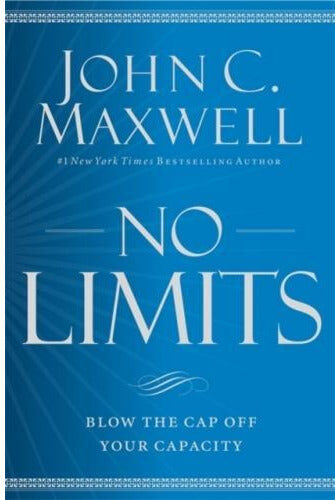
Little Brown Book Group No Limits: Blow the Cap Off Your Capacity by John C. Maxwell – Personal Growth & Leadership Development GuideNo Limits: Blow the CAP Off Your Capacity Description We often treat the word capacity as if it were a natural law of limitation. Unfortunately; most of us are much more comfortable defining what we perceive is off limits rather than what's possible. Could it be that many people have allowed what they perceive as capacity to define them? Have they allowed their perception to limit their attitudes about their potential? In his newest book; John Maxwell identifies 17 core capacities. Some of these are abilities we all already possess; such as energy; creativity and leadership. Others are aspects of our lives controlled by our choices; like our attitudes; character; and intentionality. Maxwell examines each of these 17 capacities; and provides clear and actionable advice on how you can increase your potential in each. He will guide you on how to identify; grow; and apply your critical capacities to your daily life. Once you've blown the 'cap' off your capacities; you'll find yourself more successful--and fulfilled--in your daily life.5,99 £*Shipping: 2,99 £Secure redirect to the provider
-
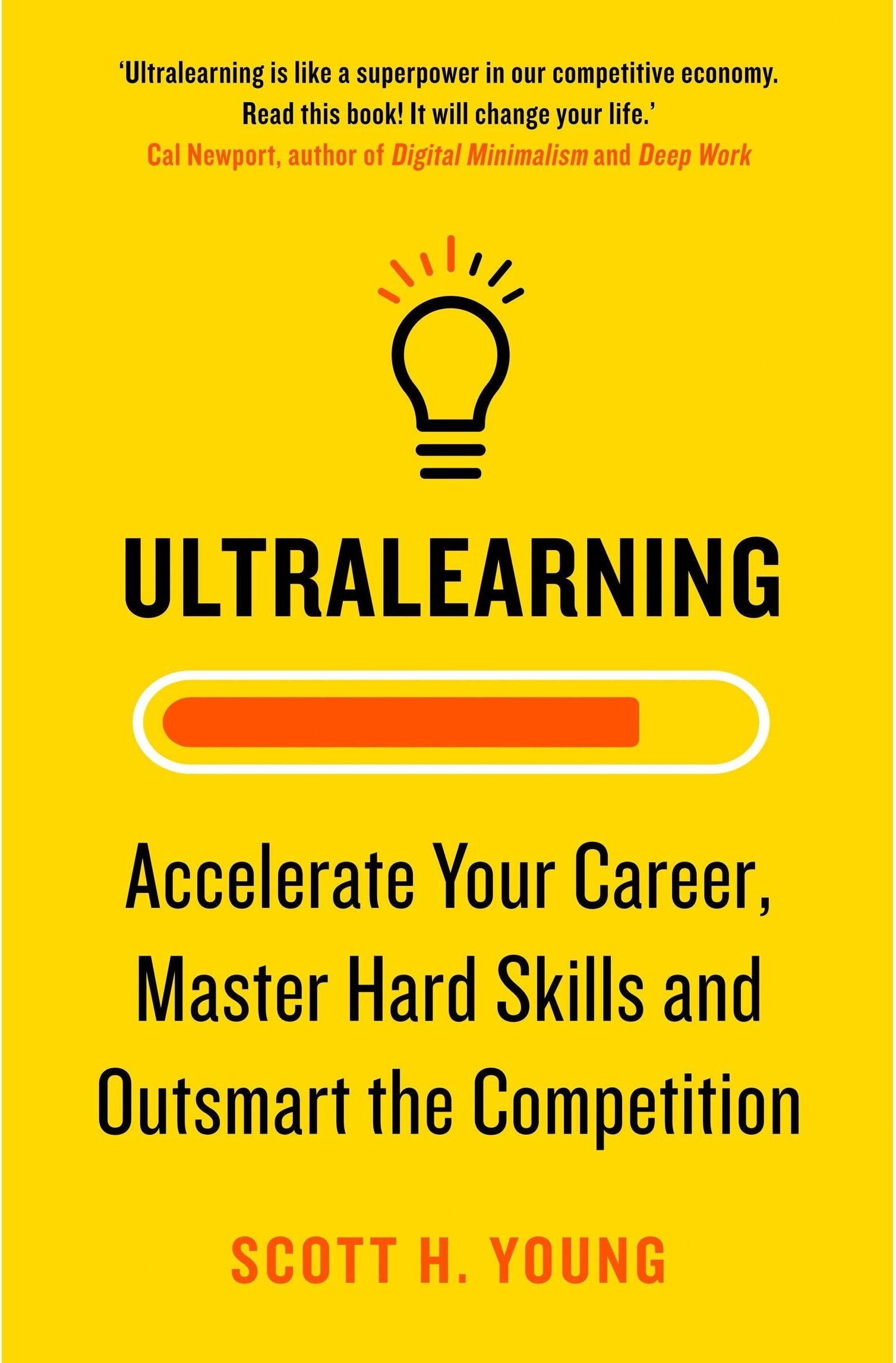
Thorsons Ultralearning: Accelerate Your Career, Master Hard Skills and Outsmart the CompetitionFuture-proof your career and maximize your competitive advantage by learning the skill necessary to stay relevant, reinvent yourself, and adapt to whatever the workplace throws your way in this essential guide. Faced with tumultuous economic times and rapid technological change, staying ahead in your career depends on continual learning―a lifelong mastery of new ideas, subjects, and skills. If you want to accomplish more and stand apart from everyone else, you need to become an ultralearner. Scott Young incorporates the latest research about the most effective learning methods and the stories of other ultralearners like himself―among them Ben Franklin, Judit Polgar, and Richard Feynman, as well as a host of others, such as little-known modern polymaths like Nigel Richards who won the World Championship of French Scrabble―without knowing French. Young documents the methods he and others have used and shows that, far from being an obscure skill limited to aggressive autodidacts, ultralearning is a powerful tool anyone can use to improve their career, studies, and life. Ultralearning explores this fascinating subculture, shares the nine principles behind every successful ultralearning project, and offers insights into how you can organize and execute a plan to learn anything deeply and quickly, without teachers or budget-busting tuition costs. Whether the goal is to be fluent in a language (or ten languages), earn the equivalent of a college degree in a fraction of the time, or master multiple skills to build a product or business from the ground up, the principles in Ultralearning will guide you to success.8,99 £*Shipping: 2,99 £Secure redirect to the provider
-
Bluebird How to Stay Sane: The School of Life by Philippa PerryThere is no simple set of instructions that can guarantee sanity. But if you want to overcome emotional difficulties and become happier, psychotherapist Philippa Perry argues that there are four cornerstones to sanity you can influence to bring about change. By developing your self-observation skills, examining how you relate to others, breaking out of your comfort zone and exploring new ways of defining yourself, Philippa demonstrates that it is possible to become a little less tortured and a little more fulfilled. How to Stay Sane is at once a brilliant explanation of our minds and a profoundly useful guide to facing up to the many challenges life throws our way.3,99 £*Shipping: 1,99 £Secure redirect to the provider


-
What are life skills?
Life skills are the abilities and competencies that help individuals effectively navigate the challenges and demands of everyday life. These skills include a wide range of personal, social, and emotional capabilities such as communication, decision-making, problem-solving, critical thinking, and stress management. Life skills are essential for personal development, maintaining healthy relationships, and achieving success in various aspects of life, including education, work, and community involvement. Developing and honing life skills can lead to greater resilience, adaptability, and overall well-being. **
-
Why are practical life skills not taught in school?
Practical life skills are often not taught in school because the focus is primarily on academic subjects and standardized testing. Additionally, there may be a lack of resources and time dedicated to teaching these skills within the curriculum. Some educators and policymakers may also prioritize academic achievement over practical life skills, leading to a lack of emphasis on teaching these important abilities. However, there is a growing recognition of the importance of practical life skills, and efforts are being made to incorporate them into school curriculums. **
-
Should life skills be introduced as a subject in school?
Yes, life skills should be introduced as a subject in school. Teaching life skills such as financial literacy, time management, communication, and problem-solving can better prepare students for the challenges they will face in adulthood. These skills are essential for success in both personal and professional life, and introducing them as a subject in school can help students develop a strong foundation early on. Additionally, teaching life skills in school can help bridge the gap between academic knowledge and real-world application, ultimately better equipping students for life after graduation. **
-
'Career or a simple life?'
The choice between a career and a simple life ultimately depends on individual priorities and values. Some people may prioritize career success and fulfillment, seeking out opportunities for advancement and professional growth. Others may prioritize a simple life, focusing on personal relationships, hobbies, and a slower pace of living. Both paths have their own merits and drawbacks, and the decision ultimately comes down to what brings the most satisfaction and fulfillment to the individual. **


Why does school education not prepare for professional life?
School education often focuses on theoretical knowledge and academic skills, rather than practical skills and real-world experience needed for professional life. The curriculum may not always be aligned with the current demands of the job market, and students may not receive sufficient guidance on career paths and opportunities. Additionally, the traditional education system may not always emphasize important skills such as critical thinking, problem-solving, and communication, which are essential for success in the professional world. Finally, the lack of practical experience and exposure to different industries and workplaces can leave students unprepared for the realities of professional life. **
What does school-to-career development mean?
School-to-career development refers to the process of preparing students for the transition from the classroom to the workforce. It involves providing students with the necessary skills, knowledge, and experiences to succeed in their chosen career paths. This can include career exploration, internships, job shadowing, and other hands-on learning opportunities that help students make informed decisions about their future careers. The goal of school-to-career development is to ensure that students are well-equipped to enter the workforce and thrive in their chosen professions. **
Top-Angebote
Products related to Life:
-
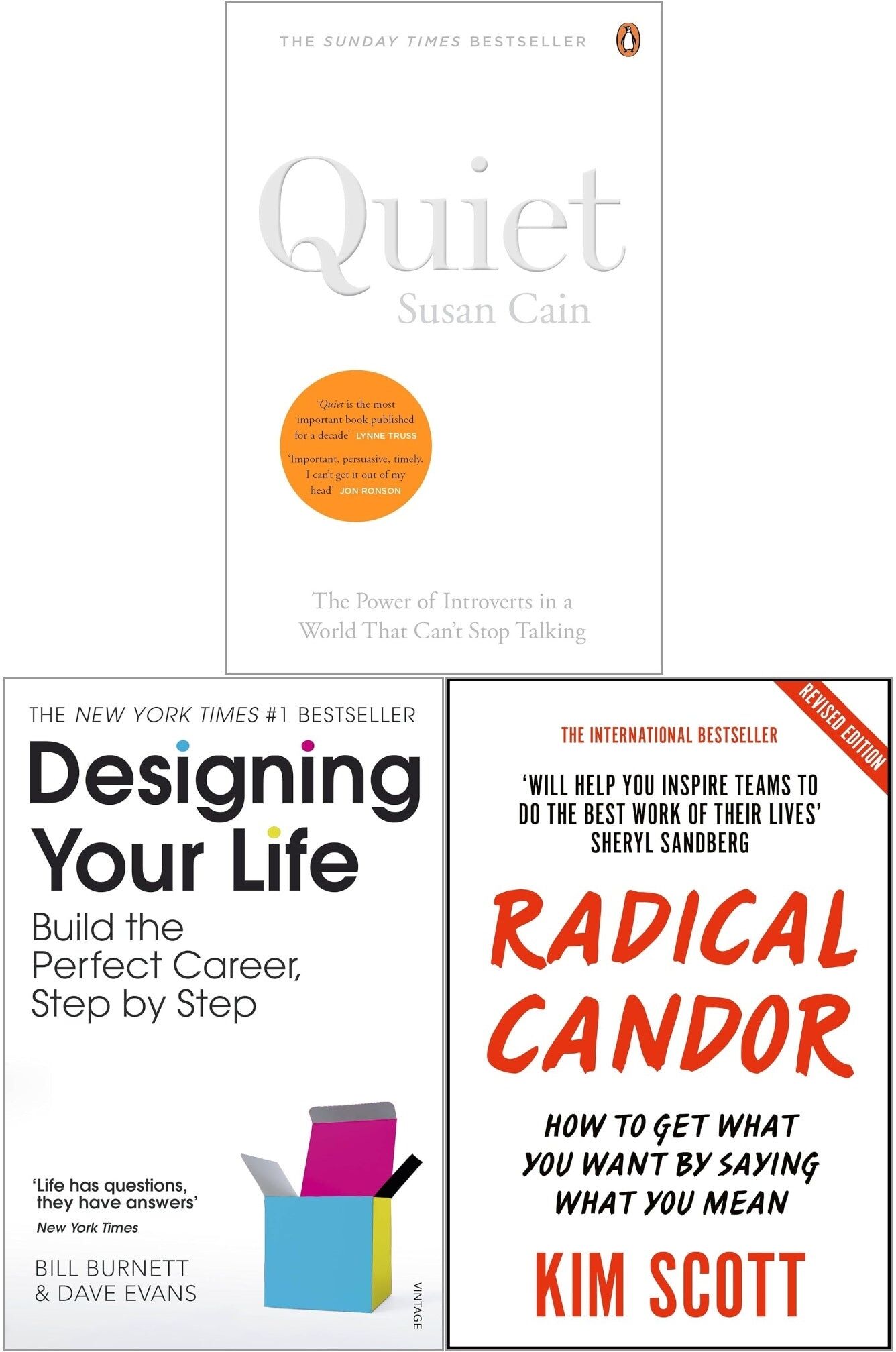
Penguin/Pan Macmillan Designing Your Life, Radical Candor and Quiet 3 Books Collection Set Personal Development, Leadership, Career Success & Self ImprovementDesigning Your Life, Radical Candor and Quiet 3 Books Collection Set Designing Your Life by Bill Burnett & Dave Evans Stanford innovators Bill Burnett and Dave Evans show us how design thinking can help us create a life that is both meaningful and fulfilling, regardless of who and where we are, our careers and our age. Designing Your Life puts forward the idea that the same design thinking responsible for amazing technology, products and spaces can be used to build towards a better life and career by a design of your own making. Radical Candor by Kim Scott Radical Candor by Kim Scott is a groundbreaking leadership and communication guide that teaches how to give feedback effectively, build trust, and create high-performing teams without becoming harsh—or avoiding difficult conversations. Based on Scott’s experience at Google, Apple and Silicon Valley startups, Radical Candor introduces a simple but powerful framework built on two pillars: Care Personally Challenge Directly The book provides practical tools for giving honest feedback, fostering open communication, strengthening working relationships, and becoming a more compassionate and impactful leader. Quiet by Susan Cain Quiet, the Sunday Times and New York Times Bestseller by Susan Cain, will permanently change how we see introverts - and how you see yourself. Our lives are driven by a fact most of us cant name and dont understand: whether were an introvert or an extrovert. This defines who our friends and lovers are, which careers we choose, and whether we blush when were embarrassed. At least a third of us are on the introverted side. Some of the worlds most talented people are introverts. Without them, we wouldnt have the Apple computer, the theory of relativity and Van Goghs sunflowers.16,99 £*Shipping: 2,99 £Secure redirect to the provider
-
Penguin Alain de Botton Collection 2 Books Set (A Therapeutic Journey and The School of Life An Emotional Education)Alain de Botton Collection 2 Books Set (A Therapeutic Journey & The School of Life An Emotional Education): A Therapeutic Journey: This is a book about how to optimise your mental health. Written with kindness and sympathy, it is a practical guide to emotional well-being, calm and psychological maturity. Alain de Botton explores how we can cope with a variety of mental challenges, from the mild to the severe. It considers how and why we can get overly anxious or low; how we can best understand our pasts and how they shape us; and how we can build resilience, so as to live wisely alongside certain difficulties.At heart this is a book about psychological happiness – about discovering equilibrium and meaning, and finding our way to connection and joy. The School of Life: An Emotional Education: This is a book about everything you were never taught at school. It's about how to understand your emotions, find and sustain love, succeed in your career, fail well and overcome shame and guilt. It's also about letting go of the myth of a perfect life in order to achieve genuine emotional maturity. Written in a hugely accessible, warm and humane style, The School of Life is the ultimate guide to the emotionally fulfilled lives we all long for - and deserve.This book brings together ten years of essential and transformative research on emotional intelligence, with practical topics including: - how to understand yourself- how to master the dilemmas of relationships- how to become more effective at work- how to endure failure- how to grow more serene and resilient.15,99 £*Shipping: 2,99 £Secure redirect to the provider
-
MACMILLAN An Astronaut's Guide to Life on Earth – Chris Hadfield Life Lessons from Space Inspirational Memoir & Personal Development BookDiscover practical wisdom inspired by a remarkable career in space with An Astronaut's Guide to Life on Earth by renowned astronaut Chris Hadfield. Drawing on decades of experience as an astronaut, engineer, and commander of the International Space Station, Chris Hadfield shares the lessons he learned while preparing for and living in one of the world's most demanding environments. Combining inspiring personal stories with practical advice, he explores how preparation, resilience, teamwork, curiosity, and determination can help anyone overcome challenges and achieve their goals. Blending memoir, leadership insights, and fascinating stories of space exploration, this bestselling book is perfect for readers interested in science, personal development, and real-life inspiration. Why Readers Love This Book: Inspiring memoir from celebrated astronaut Chris Hadfield Practical lessons on resilience, leadership, and success Fascinating behind-the-scenes stories from space missions Perfect for fans of space exploration, science, and biographies Ideal gift for aspiring astronauts, students, and nonfiction readers A compelling and motivational read, An Astronaut's Guide to Life on Earth demonstrates how the mindset developed for space missions can inspire success in everyday life.1,99 £*Shipping: 1,99 £Secure redirect to the provider
-
Little Brown Book Group No Limits: Blow the Cap Off Your Capacity by John C. Maxwell – Personal Growth & Leadership Development GuideNo Limits: Blow the CAP Off Your Capacity Description We often treat the word capacity as if it were a natural law of limitation. Unfortunately; most of us are much more comfortable defining what we perceive is off limits rather than what's possible. Could it be that many people have allowed what they perceive as capacity to define them? Have they allowed their perception to limit their attitudes about their potential? In his newest book; John Maxwell identifies 17 core capacities. Some of these are abilities we all already possess; such as energy; creativity and leadership. Others are aspects of our lives controlled by our choices; like our attitudes; character; and intentionality. Maxwell examines each of these 17 capacities; and provides clear and actionable advice on how you can increase your potential in each. He will guide you on how to identify; grow; and apply your critical capacities to your daily life. Once you've blown the 'cap' off your capacities; you'll find yourself more successful--and fulfilled--in your daily life.5,99 £*Shipping: 2,99 £Secure redirect to the provider
-
Should students also acquire life skills in school?
Yes, students should also acquire life skills in school. Life skills such as communication, problem-solving, decision-making, and financial literacy are essential for success in both personal and professional life. By learning these skills in school, students can better prepare themselves for the challenges and responsibilities they will face as adults. Additionally, acquiring life skills can help students become more well-rounded individuals and contribute positively to their communities. Therefore, integrating life skills into the school curriculum can better equip students for the real world. **
-
What is the difference between school education and professional career development?
School education focuses on providing students with a broad range of knowledge and skills across various subjects, while professional career development is more specialized and focused on preparing individuals for specific careers or industries. School education typically covers a wide range of subjects, including math, science, language arts, and social studies, while professional career development often involves specialized training, certifications, and hands-on experience in a particular field. Additionally, school education is often more theoretical and academic, while professional career development is more practical and geared towards preparing individuals for the workforce. **
-
What are life skills?
Life skills are the abilities and competencies that help individuals effectively navigate the challenges and demands of everyday life. These skills include a wide range of personal, social, and emotional capabilities such as communication, decision-making, problem-solving, critical thinking, and stress management. Life skills are essential for personal development, maintaining healthy relationships, and achieving success in various aspects of life, including education, work, and community involvement. Developing and honing life skills can lead to greater resilience, adaptability, and overall well-being. **
-
Why are practical life skills not taught in school?
Practical life skills are often not taught in school because the focus is primarily on academic subjects and standardized testing. Additionally, there may be a lack of resources and time dedicated to teaching these skills within the curriculum. Some educators and policymakers may also prioritize academic achievement over practical life skills, leading to a lack of emphasis on teaching these important abilities. However, there is a growing recognition of the importance of practical life skills, and efforts are being made to incorporate them into school curriculums. **
Similar search terms for Life
-
Thorsons Ultralearning: Accelerate Your Career, Master Hard Skills and Outsmart the CompetitionFuture-proof your career and maximize your competitive advantage by learning the skill necessary to stay relevant, reinvent yourself, and adapt to whatever the workplace throws your way in this essential guide. Faced with tumultuous economic times and rapid technological change, staying ahead in your career depends on continual learning―a lifelong mastery of new ideas, subjects, and skills. If you want to accomplish more and stand apart from everyone else, you need to become an ultralearner. Scott Young incorporates the latest research about the most effective learning methods and the stories of other ultralearners like himself―among them Ben Franklin, Judit Polgar, and Richard Feynman, as well as a host of others, such as little-known modern polymaths like Nigel Richards who won the World Championship of French Scrabble―without knowing French. Young documents the methods he and others have used and shows that, far from being an obscure skill limited to aggressive autodidacts, ultralearning is a powerful tool anyone can use to improve their career, studies, and life. Ultralearning explores this fascinating subculture, shares the nine principles behind every successful ultralearning project, and offers insights into how you can organize and execute a plan to learn anything deeply and quickly, without teachers or budget-busting tuition costs. Whether the goal is to be fluent in a language (or ten languages), earn the equivalent of a college degree in a fraction of the time, or master multiple skills to build a product or business from the ground up, the principles in Ultralearning will guide you to success.8,99 £*Shipping: 2,99 £Secure redirect to the provider
-
Bluebird How to Stay Sane: The School of Life by Philippa PerryThere is no simple set of instructions that can guarantee sanity. But if you want to overcome emotional difficulties and become happier, psychotherapist Philippa Perry argues that there are four cornerstones to sanity you can influence to bring about change. By developing your self-observation skills, examining how you relate to others, breaking out of your comfort zone and exploring new ways of defining yourself, Philippa demonstrates that it is possible to become a little less tortured and a little more fulfilled. How to Stay Sane is at once a brilliant explanation of our minds and a profoundly useful guide to facing up to the many challenges life throws our way.3,99 £*Shipping: 1,99 £Secure redirect to the provider
-
Perfect Picks Market Geometric Building Blocks Set For Kids Early Education Intelligence Development Toy Geometric Building Blocks Set For Kids Early Education Intelligence Development ToyUnlock your child's potential with this early education equipment designed to stimulate creativity and intelligence! This geometric set is the perfect building block toy for boys, helping to develop problemsolving skills while having fun. The...35,97 $*Shipping: 0,00 $Secure redirect to the provider
-
Scribe UK/Bluebird/Penguin Reinventing Your Life, How To Stay Sane The School of Life, Thinking Fast and Slow 3 Books Collection SetReinventing Your Life, How To Stay Sane The School of Life, Thinking Fast and Slow 3 Books Collection Set Reinventing Your Life: Unsatisfactory relationships, irrational lack of self-esteem, feelings of being unfulfilled -- these are all problems that can be solved by changing the types of messages that people internalise. These self-defeating behavior patterns are called lifetraps, and Reinventing Your Life shows you how to stop the cycle that keeps you from attaining happiness. Two of America's leading psychologists, Jeffrey E. Young, PhD, and Janet S. Klosko, PhD, draw on the breakthrough principles of cognitive therapy to help you recognise and change negative thought patterns, without the aid of drugs or long-term traditional therapy. How To Stay Sane The School of Life: By developing your self-observation skills, examining how you relate to others, breaking out of your comfort zone and exploring new ways of defining yourself, Philippa demonstrates that it is possible to become a little less tortured and a little more fulfilled. How to Stay Sane is at once a brilliant explanation of our minds and a profoundly useful guide to facing up to the many challenges life throws our way. Thinking Fast and Slow: Why is there more chance we'll believe something if it's in a bold type face? Why are judges more likely to deny parole before lunch? Why do we assume a good-looking person will be more competent? The answer lies in the two ways we make choices: fast, intuitive thinking, and slow, rational thinking17,95 £*Shipping: 2,99 £Secure redirect to the provider
-
Should life skills be introduced as a subject in school?
Yes, life skills should be introduced as a subject in school. Teaching life skills such as financial literacy, time management, communication, and problem-solving can better prepare students for the challenges they will face in adulthood. These skills are essential for success in both personal and professional life, and introducing them as a subject in school can help students develop a strong foundation early on. Additionally, teaching life skills in school can help bridge the gap between academic knowledge and real-world application, ultimately better equipping students for life after graduation. **
-
'Career or a simple life?'
The choice between a career and a simple life ultimately depends on individual priorities and values. Some people may prioritize career success and fulfillment, seeking out opportunities for advancement and professional growth. Others may prioritize a simple life, focusing on personal relationships, hobbies, and a slower pace of living. Both paths have their own merits and drawbacks, and the decision ultimately comes down to what brings the most satisfaction and fulfillment to the individual. **
-
Why does school education not prepare for professional life?
School education often focuses on theoretical knowledge and academic skills, rather than practical skills and real-world experience needed for professional life. The curriculum may not always be aligned with the current demands of the job market, and students may not receive sufficient guidance on career paths and opportunities. Additionally, the traditional education system may not always emphasize important skills such as critical thinking, problem-solving, and communication, which are essential for success in the professional world. Finally, the lack of practical experience and exposure to different industries and workplaces can leave students unprepared for the realities of professional life. **
-
What does school-to-career development mean?
School-to-career development refers to the process of preparing students for the transition from the classroom to the workforce. It involves providing students with the necessary skills, knowledge, and experiences to succeed in their chosen career paths. This can include career exploration, internships, job shadowing, and other hands-on learning opportunities that help students make informed decisions about their future careers. The goal of school-to-career development is to ensure that students are well-equipped to enter the workforce and thrive in their chosen professions. **
* All prices are inclusive of VAT and, if applicable, plus shipping costs. The offer information is based on the details provided by the respective shop and is updated through automated processes. Real-time updates do not occur, so deviations can occur in individual cases. ** Note: Parts of this content were created by AI.