Buy management-school.eu ?
We are moving the project
management-school.eu .
Are you interested in purchasing the domain
management-school.eu ?
domain@kv-gmbh.de · 0541-91531010
Buy management-school.eu ?
What are painted rocks?
Painted rocks are rocks that have been decorated with various designs, patterns, and images using paint or markers. People often paint rocks as a form of creative expression and then place them in public spaces for others to find and enjoy. This activity has become popular as a way to spread positivity and brighten someone's day when they come across a beautifully painted rock. Some people also use painted rocks as a form of outdoor art or to create a sense of community connection. **
Why do rocks smell?
Rocks do not actually have a smell themselves. However, sometimes rocks can emit a smell when they are heated or crushed. This smell is often due to the release of volatile compounds or minerals within the rock. For example, when rocks containing sulfur compounds are crushed, they can release a distinct rotten egg smell. **


Similar search terms for Rocks
Top-Angebote
Products related to Rocks:
-
Klutz: Maker Lab: Rocks, Gems & GeodesKick-start your very own rock collection with the 36 stones. Then use the included crystal powder and mold to grow a geode formation. Collect rocks and conduct experiments, such as a scratch test and float test, to discover their hidden properties....24,99 $*Shipping: 0,00 $Secure redirect to the provider
-
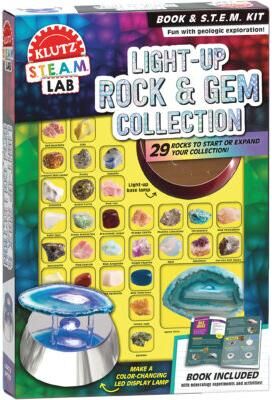
Klutz: Light Up Rocks & Gems CollectionPacked with 29 unique rocks, gems, and minerals, this is the perfect kit to start or expand a rock collection. Build a color-changing light-up display with an agate slice: use it as a lamp, or study the stones up close with the included magnifying...24,99 $*Shipping: 0,00 $Secure redirect to the provider
-
Thorsons Ultralearning: Accelerate Your Career, Master Hard Skills and Outsmart the CompetitionFuture-proof your career and maximize your competitive advantage by learning the skill necessary to stay relevant, reinvent yourself, and adapt to whatever the workplace throws your way in this essential guide. Faced with tumultuous economic times and rapid technological change, staying ahead in your career depends on continual learning―a lifelong mastery of new ideas, subjects, and skills. If you want to accomplish more and stand apart from everyone else, you need to become an ultralearner. Scott Young incorporates the latest research about the most effective learning methods and the stories of other ultralearners like himself―among them Ben Franklin, Judit Polgar, and Richard Feynman, as well as a host of others, such as little-known modern polymaths like Nigel Richards who won the World Championship of French Scrabble―without knowing French. Young documents the methods he and others have used and shows that, far from being an obscure skill limited to aggressive autodidacts, ultralearning is a powerful tool anyone can use to improve their career, studies, and life. Ultralearning explores this fascinating subculture, shares the nine principles behind every successful ultralearning project, and offers insights into how you can organize and execute a plan to learn anything deeply and quickly, without teachers or budget-busting tuition costs. Whether the goal is to be fluent in a language (or ten languages), earn the equivalent of a college degree in a fraction of the time, or master multiple skills to build a product or business from the ground up, the principles in Ultralearning will guide you to success.8,99 £*Shipping: 2,99 £Secure redirect to the provider
-
Little Brown Book Group No Limits: Blow the Cap Off Your Capacity by John C. Maxwell – Personal Growth & Leadership Development GuideNo Limits: Blow the CAP Off Your Capacity Description We often treat the word capacity as if it were a natural law of limitation. Unfortunately; most of us are much more comfortable defining what we perceive is off limits rather than what's possible. Could it be that many people have allowed what they perceive as capacity to define them? Have they allowed their perception to limit their attitudes about their potential? In his newest book; John Maxwell identifies 17 core capacities. Some of these are abilities we all already possess; such as energy; creativity and leadership. Others are aspects of our lives controlled by our choices; like our attitudes; character; and intentionality. Maxwell examines each of these 17 capacities; and provides clear and actionable advice on how you can increase your potential in each. He will guide you on how to identify; grow; and apply your critical capacities to your daily life. Once you've blown the 'cap' off your capacities; you'll find yourself more successful--and fulfilled--in your daily life.5,99 £*Shipping: 2,99 £Secure redirect to the provider



-
How are rocks formed?
Rocks are formed through a process called the rock cycle, which involves the transformation of one type of rock into another over time. The rock cycle begins with the cooling and solidification of magma or lava, which forms igneous rocks. These rocks can then be broken down into smaller pieces through weathering and erosion, and the resulting sediments can be compacted and cemented together to form sedimentary rocks. Over time, these rocks can be subjected to heat and pressure, causing them to undergo changes and become metamorphic rocks. This continuous process of formation, transformation, and reformation is what shapes the Earth's crust and creates the variety of rocks we see today. **
-
How can glaciers erode rocks?
Glaciers can erode rocks through a process called plucking and abrasion. Plucking occurs when the glacier freezes onto the rock and then pulls it away as the glacier moves, causing pieces of the rock to be plucked off. Abrasion occurs as the glacier moves and the rocks embedded in the ice scrape against the bedrock, wearing it down over time. These processes can result in the formation of glacial valleys, cirques, and other landforms as the glacier erodes the surrounding rock. **
-
How can one identify rocks?
Rocks can be identified based on their physical characteristics such as color, texture, and mineral composition. Color can provide clues about the types of minerals present in the rock, while texture can indicate how the rock was formed (e.g. smooth texture in sedimentary rocks). Mineral composition can be determined by conducting tests such as scratching the rock to see its hardness or using acid to test for carbonate minerals. Additionally, the overall appearance and structure of the rock can also help in identifying its type. **
-
'How do you paint rocks?'
To paint rocks, start by cleaning them with soap and water to remove any dirt or debris. Once they are dry, apply a base coat of acrylic paint to the entire rock and let it dry completely. Then, use smaller brushes and acrylic paint to add your desired designs or patterns to the rock. You can also use paint pens or markers for more detailed designs. Once the paint is dry, seal the rock with a clear acrylic sealer to protect the paint and give it a glossy finish. **


How can glaciers shape rocks?
Glaciers can shape rocks through a process called glacial erosion. As glaciers move, they pick up rocks and debris, which act as tools to grind and scrape the underlying bedrock. This process can create features such as striations, grooves, and polished surfaces on rocks. Additionally, as glaciers melt, they can deposit the rocks they were carrying, forming landforms like moraines and drumlins. **
When are meteorites considered rocks?
Meteorites are considered rocks when they are found on Earth's surface and are confirmed to be fragments of asteroids or other celestial bodies. These rocks have survived the journey through Earth's atmosphere and have landed on the surface. Scientists study meteorites to learn more about the composition and history of our solar system. **
Top-Angebote
Products related to Rocks:
-
Penguin/Pan Macmillan Designing Your Life, Radical Candor and Quiet 3 Books Collection Set Personal Development, Leadership, Career Success & Self ImprovementDesigning Your Life, Radical Candor and Quiet 3 Books Collection Set Designing Your Life by Bill Burnett & Dave Evans Stanford innovators Bill Burnett and Dave Evans show us how design thinking can help us create a life that is both meaningful and fulfilling, regardless of who and where we are, our careers and our age. Designing Your Life puts forward the idea that the same design thinking responsible for amazing technology, products and spaces can be used to build towards a better life and career by a design of your own making. Radical Candor by Kim Scott Radical Candor by Kim Scott is a groundbreaking leadership and communication guide that teaches how to give feedback effectively, build trust, and create high-performing teams without becoming harsh—or avoiding difficult conversations. Based on Scott’s experience at Google, Apple and Silicon Valley startups, Radical Candor introduces a simple but powerful framework built on two pillars: Care Personally Challenge Directly The book provides practical tools for giving honest feedback, fostering open communication, strengthening working relationships, and becoming a more compassionate and impactful leader. Quiet by Susan Cain Quiet, the Sunday Times and New York Times Bestseller by Susan Cain, will permanently change how we see introverts - and how you see yourself. Our lives are driven by a fact most of us cant name and dont understand: whether were an introvert or an extrovert. This defines who our friends and lovers are, which careers we choose, and whether we blush when were embarrassed. At least a third of us are on the introverted side. Some of the worlds most talented people are introverts. Without them, we wouldnt have the Apple computer, the theory of relativity and Van Goghs sunflowers.16,99 £*Shipping: 2,99 £Secure redirect to the provider
-
RIEDEL Drink Specific Glassware Rocks GlassThe Rocks Glass is part of the latest revolutionary collection from RIEDEL Bar, named Drink Specific Glassware. This glass is perfect for spirits served on the rocks or mixed cocktails, and is specially sized for large format ice.49,00 $*Shipping: 0,00 $Secure redirect to the provider
-
Klutz: Maker Lab: Rocks, Gems & GeodesKick-start your very own rock collection with the 36 stones. Then use the included crystal powder and mold to grow a geode formation. Collect rocks and conduct experiments, such as a scratch test and float test, to discover their hidden properties....24,99 $*Shipping: 0,00 $Secure redirect to the provider
-
Klutz: Light Up Rocks & Gems CollectionPacked with 29 unique rocks, gems, and minerals, this is the perfect kit to start or expand a rock collection. Build a color-changing light-up display with an agate slice: use it as a lamp, or study the stones up close with the included magnifying...24,99 $*Shipping: 0,00 $Secure redirect to the provider
-
What are painted rocks?
Painted rocks are rocks that have been decorated with various designs, patterns, and images using paint or markers. People often paint rocks as a form of creative expression and then place them in public spaces for others to find and enjoy. This activity has become popular as a way to spread positivity and brighten someone's day when they come across a beautifully painted rock. Some people also use painted rocks as a form of outdoor art or to create a sense of community connection. **
-
Why do rocks smell?
Rocks do not actually have a smell themselves. However, sometimes rocks can emit a smell when they are heated or crushed. This smell is often due to the release of volatile compounds or minerals within the rock. For example, when rocks containing sulfur compounds are crushed, they can release a distinct rotten egg smell. **
-
How are rocks formed?
Rocks are formed through a process called the rock cycle, which involves the transformation of one type of rock into another over time. The rock cycle begins with the cooling and solidification of magma or lava, which forms igneous rocks. These rocks can then be broken down into smaller pieces through weathering and erosion, and the resulting sediments can be compacted and cemented together to form sedimentary rocks. Over time, these rocks can be subjected to heat and pressure, causing them to undergo changes and become metamorphic rocks. This continuous process of formation, transformation, and reformation is what shapes the Earth's crust and creates the variety of rocks we see today. **
-
How can glaciers erode rocks?
Glaciers can erode rocks through a process called plucking and abrasion. Plucking occurs when the glacier freezes onto the rock and then pulls it away as the glacier moves, causing pieces of the rock to be plucked off. Abrasion occurs as the glacier moves and the rocks embedded in the ice scrape against the bedrock, wearing it down over time. These processes can result in the formation of glacial valleys, cirques, and other landforms as the glacier erodes the surrounding rock. **
Similar search terms for Rocks
-
Thorsons Ultralearning: Accelerate Your Career, Master Hard Skills and Outsmart the CompetitionFuture-proof your career and maximize your competitive advantage by learning the skill necessary to stay relevant, reinvent yourself, and adapt to whatever the workplace throws your way in this essential guide. Faced with tumultuous economic times and rapid technological change, staying ahead in your career depends on continual learning―a lifelong mastery of new ideas, subjects, and skills. If you want to accomplish more and stand apart from everyone else, you need to become an ultralearner. Scott Young incorporates the latest research about the most effective learning methods and the stories of other ultralearners like himself―among them Ben Franklin, Judit Polgar, and Richard Feynman, as well as a host of others, such as little-known modern polymaths like Nigel Richards who won the World Championship of French Scrabble―without knowing French. Young documents the methods he and others have used and shows that, far from being an obscure skill limited to aggressive autodidacts, ultralearning is a powerful tool anyone can use to improve their career, studies, and life. Ultralearning explores this fascinating subculture, shares the nine principles behind every successful ultralearning project, and offers insights into how you can organize and execute a plan to learn anything deeply and quickly, without teachers or budget-busting tuition costs. Whether the goal is to be fluent in a language (or ten languages), earn the equivalent of a college degree in a fraction of the time, or master multiple skills to build a product or business from the ground up, the principles in Ultralearning will guide you to success.8,99 £*Shipping: 2,99 £Secure redirect to the provider
-
Little Brown Book Group No Limits: Blow the Cap Off Your Capacity by John C. Maxwell – Personal Growth & Leadership Development GuideNo Limits: Blow the CAP Off Your Capacity Description We often treat the word capacity as if it were a natural law of limitation. Unfortunately; most of us are much more comfortable defining what we perceive is off limits rather than what's possible. Could it be that many people have allowed what they perceive as capacity to define them? Have they allowed their perception to limit their attitudes about their potential? In his newest book; John Maxwell identifies 17 core capacities. Some of these are abilities we all already possess; such as energy; creativity and leadership. Others are aspects of our lives controlled by our choices; like our attitudes; character; and intentionality. Maxwell examines each of these 17 capacities; and provides clear and actionable advice on how you can increase your potential in each. He will guide you on how to identify; grow; and apply your critical capacities to your daily life. Once you've blown the 'cap' off your capacities; you'll find yourself more successful--and fulfilled--in your daily life.5,99 £*Shipping: 2,99 £Secure redirect to the provider
-
Riedel Bar Set of 8 Rocks & Highball GlassesThis Riedel Bar Pack of 8 Drink Rocks & Highball, contains 4 x rocks glasses and 4 x highballs. The two Rocks Glasses are perfect for for spirits served on the rocks or mixed cocktails. The highball glasses are equally good for mixed cocktails as they have a tall shape. Both types of glasses are specially sized for large format ice. Part of the Riedel Bar collection.79,20 £*Shipping: 0,00 £Secure redirect to the provider
-
Riedel Bar Set of 2 Double Rocks GlassesThe Riedel Bar Set of 2 Double Rocks Glasses is part of the Drink Specific Glassware collection, expertly designed for serving premium spirits and classic cocktails on the rocks. Each glass features a refined, heavyweight base and a generous bowl to accommodate standard or large ice cubes, allowing the drink to open up while maintaining ideal dilution and temperature. Perfectly suited for cocktails such as the Negroni, Old Fashioned or Whiskey Sour, these glasses bring both elegance and functionality to the home or professional bar. Crafted from fine crystal glass, each Double Rocks Glass is machine-blown for consistency, brilliance and durability. Dishwasher safe for added convenience.28,00 £*Shipping: 3,50 £Secure redirect to the provider
-
How can one identify rocks?
Rocks can be identified based on their physical characteristics such as color, texture, and mineral composition. Color can provide clues about the types of minerals present in the rock, while texture can indicate how the rock was formed (e.g. smooth texture in sedimentary rocks). Mineral composition can be determined by conducting tests such as scratching the rock to see its hardness or using acid to test for carbonate minerals. Additionally, the overall appearance and structure of the rock can also help in identifying its type. **
-
'How do you paint rocks?'
To paint rocks, start by cleaning them with soap and water to remove any dirt or debris. Once they are dry, apply a base coat of acrylic paint to the entire rock and let it dry completely. Then, use smaller brushes and acrylic paint to add your desired designs or patterns to the rock. You can also use paint pens or markers for more detailed designs. Once the paint is dry, seal the rock with a clear acrylic sealer to protect the paint and give it a glossy finish. **
-
How can glaciers shape rocks?
Glaciers can shape rocks through a process called glacial erosion. As glaciers move, they pick up rocks and debris, which act as tools to grind and scrape the underlying bedrock. This process can create features such as striations, grooves, and polished surfaces on rocks. Additionally, as glaciers melt, they can deposit the rocks they were carrying, forming landforms like moraines and drumlins. **
-
When are meteorites considered rocks?
Meteorites are considered rocks when they are found on Earth's surface and are confirmed to be fragments of asteroids or other celestial bodies. These rocks have survived the journey through Earth's atmosphere and have landed on the surface. Scientists study meteorites to learn more about the composition and history of our solar system. **
* All prices are inclusive of VAT and, if applicable, plus shipping costs. The offer information is based on the details provided by the respective shop and is updated through automated processes. Real-time updates do not occur, so deviations can occur in individual cases. ** Note: Parts of this content were created by AI.